


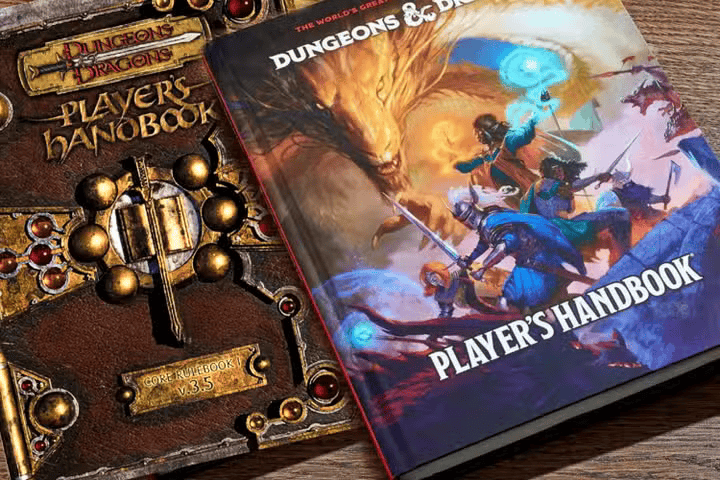
Rightfully holding a place in the hearts of Generation X, memories of playing Dungeons & Dragons (D&D) brim with nostalgia from the fantasy choice-based matches. The game remains a well-known role-playing game (RPG) 50 years later. While NC offers a broad spectrum of clubs that share similar elements to D&D, such as Mythology Club and Chess Club, a fully dedicated D&D club remained unavailable at NC until this year.
D&D meets after school on Mondays in room 702. Sponsor Nancy Wesselman encourages amateurs, seasoned players and all levels of experience in between to join. The game’s website offers tips and tricks for beginners, with the club also providing lessons on each of the game’s features. The club hopes not only to play D&D, but also to provide a space to meet others with the same interests.
“I did not know many people in my middle school who played D&D. I do see a lot of younger kids being introduced to D&D through, you know, the internet and “Stranger Things,” especially pushing it towards a younger audience. I usually see older people playing D&D,” magnet sophomore Lex Selby said.
As seen in the aforementioned “Stranger Things” series, D&D involves monsters from various mystical realms. The “Dungeon Master” role unites the responsibilities of a narrator and referee into a single position. He or she creates the world’s setting while other players choose their characters’ fantasy species, background and ability to explore within it. Adventurers navigate through opportunities and construct choices based on situations as they arise. Throughout the story, players take turns as they work toward objectives, all of which necessitate teamwork, so the game maintains a fully inclusive structure. The Dungeon Master details the storyline’s progression from subsequent decisions, occasionally asking players to roll a polyhedral die to determine their success in a task. With non-linear paths and multiple possible outcomes, D&D remains a highly replayable game as participants personalize their adventures, gamble risk and reward in different choices and gain experience points (XP).
With newer players frequently joining the community at a pivotal stage of life, the aptitudes obtained throughout gameplay represent highly beneficial skills. Problem-solving, collaborating with peers and leadership exist as several paramount life skills. Their importance starts in school classrooms and continues on into the workplace. Moreover, creativity and imagination embody qualities that the modern-day education system drains from students. Games like D&D that require resourcefulness and artistry counteract this phenomenon, leading to improved quality of work in classrooms.
“Absolutely all levels are welcome, and if we don’t have anyone to teach us, we will learn together! I know there is a national group and the website offers many tips and tricks and lessons about the game, characters and dice. I’ve never actually played D&D, though many of my friends growing up [did] so it was familiar to me when my son, who attends NC this year, asked if there was a club. Since there was not, I offered to sponsor one so that he could meet others with similar interests, and I could provide a space for others who may have wanted to meet others with the same interests,” special education teacher and club sponsor Nancy Wesselman said.
As players explore new realms, they also discover traits about themselves. Participants uncover different aspects of their personalities with highly customizable personas and strategic decisions in different scenarios. The D&D club serves as an opportunity for students to learn about the world around them in a fictional dimension.
From kitchen tables to newfound clubs, a considerable amount of interest in D&D stems from a steady rise in students who see the game as a space to both roleplay fictional alliances and to form real friendships. The creation of a dedicated club in a school setting connects students who express interest but lack a community of players to explore the world with. To its players, the hobby transforms a dice and board into dragons and swords in fully immersive storytelling. With Generation X passing down their nostalgic maps to their children, and potentially grandchildren, the joy of wizarding and warlocking spreads from beyond the Eberron realm to NC’s campus.


