

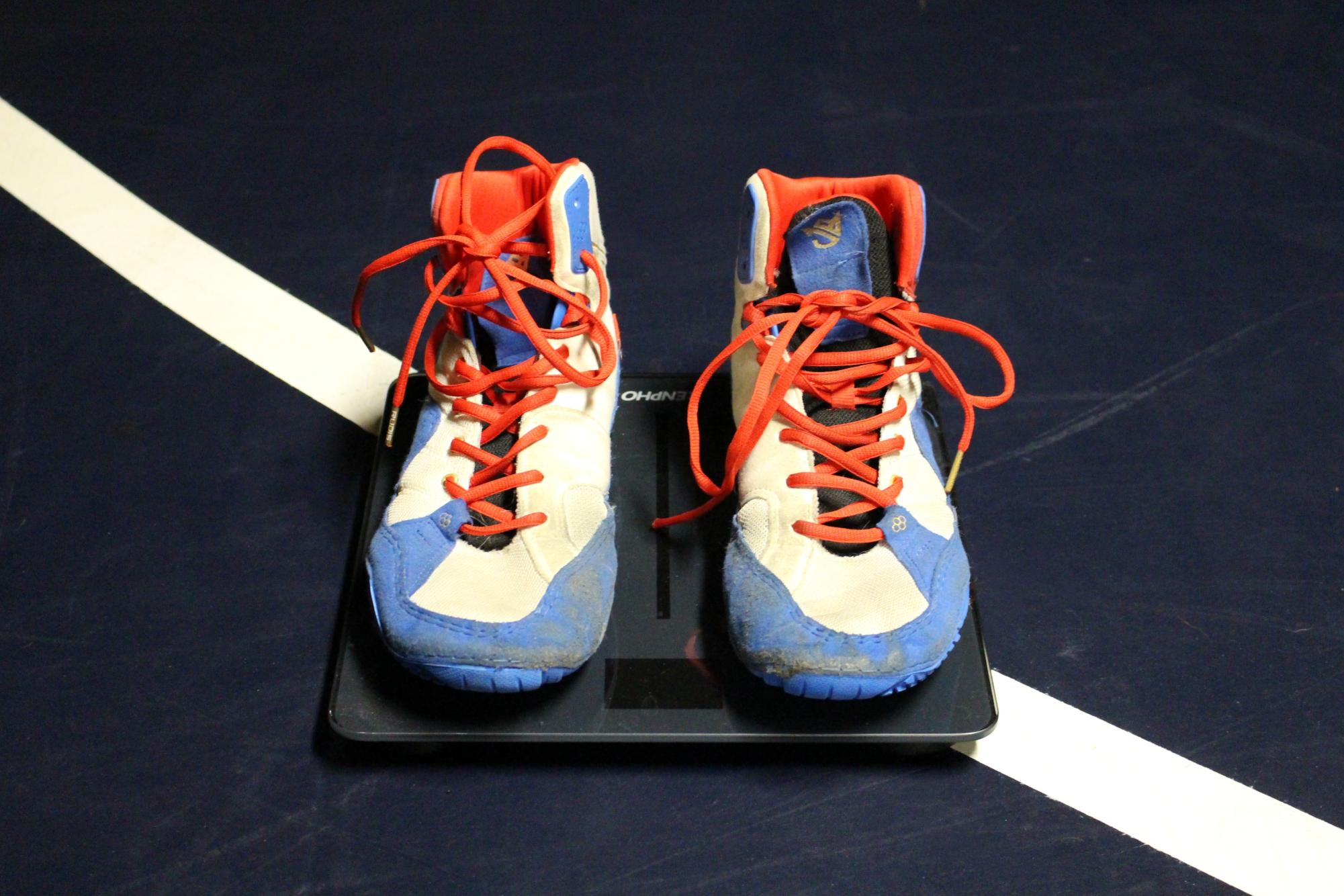

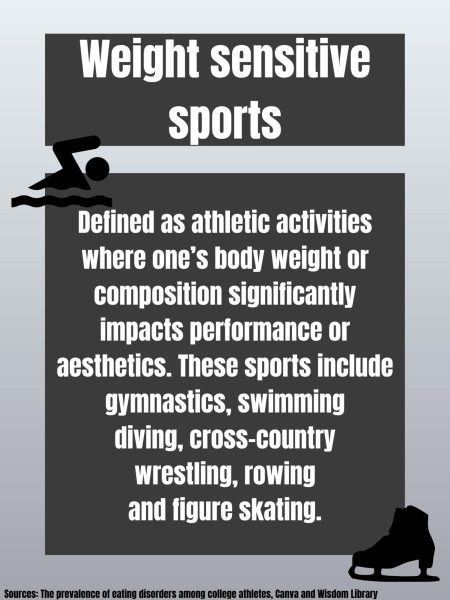
During the winter wrestling season, NC wrestlers step onto the mat carrying heavy pressure to win. Behind the intense tournaments and demeaning practices, athletes face constant pressure to lose weight to fit into lower weight classes. Wrestling separates competitors by weight classes ranging from 106 lbs. to 285 lbs. for men and 100 lbs. to 235 Depending on the starting weight of the athletes, they typically lose weight constantly through the season in hopes of wrestling in their desired class, a process known as cutting weight. Before each meet, wrestlers will complete a weigh-in to ensure their weight lies within the requirements of their weight class, and then they attempt to recover the lost mass from cutting before they compete. Athletes push their physical limits, cutting up to 10% of their body mass days before a match, only to gain the weight back after, and then need to cut again momentarily, creating a constant cycle of weight gain and weight loss. Such cycles place wrestlers in a vulnerable spot, with 1.7% of wrestlers meeting the criteria for Bulimia Nervosa out of a survey of 713 high school wrestlers in Wisconsin. Eating disorders remain especially common among athletes in weight-sensitive sports, such as wrestling, a sport that a multitude of athletes in Cobb County partake in and face a high potential of developing an eating disorder.
Before meets, wrestlers take a hydration test used to ensure that they remain properly hydrated before their match and that each athlete competes at a healthy, natural weight for their bodies. The test consists of providing a urine sample, in which the volunteers use urine dipsticks to determine whether the athlete is eligible to compete. Athletes take the test and complete it within an hour after voiding and if athletes cannot complete the test in an hour, volunteers require another sample for testing. In the case a wrestler fails the test, the organization running the event reschedules the tests for another date, a minimum of 48 hours after the first assessment.
In the early 2000s, wrestling among teenagers declined as a result of unsteady participation in the 1990s, however, the sport experienced rapid growth in 2020. A surge of high schoolers began participating in the sport once again in the 2024-2025 season, and a reported 374,278 students wrestled nationwide. 40 years ago, the sport experienced a decline, with around 60,000 male wrestlers dropping the sport, partially because of the dismantlement of a multitude of college programs. Now, 78 different colleges offer Division I (D1) wrestling programs and a number of other levels of programs, including 64 Division II (D2) schools. Within the past six years, competitive wrestling among younger generations has transformed into a nationwide phenomenon, causing the culture to spread.
Across all Georgia schools, 379 different high school boys’ wrestling programs operate statewide and 338 girls’ programs compete each season. At NC, the girls compete in the area seven (7A) division alongside 22 other teams, whereas the boys wrestle in the area five (5A) division with seven other teams. Wrestling teams tend to provide heftier squads compared to other sports teams, with around 31 athletes on the entire roster. Across the entire season, NC wrestlers receive opportunities to compete in 38 different competitions among varsity and junior varsity. At the height of the season, athletes compete in meets only days apart; in December, the teams wrestled in three meets within seven days, with individuals wrestling multiple matches every competition, compared to other sports that typically compete once or twice a week. In comparison to other competitive sports, wrestling teams compete frequently and include larger numbers of athletes; on one hand, the multitude of tournaments and competitions accumulates into healthy outcomes of the sport such as friendship, leadership qualities and the alleviation of stress. However, the positive qualities fail to eliminate the negative outcomes.
“I have been wrestling for around three years now. The sport is definitely mentally challenging because the coaches can expect a lot out of you and always push you to the max at every practice. Also, the nerves are at their max right before you step out onto the mat. I believe weight isn’t perceived as a bad thing anymore. The coaches don’t make you cut if you don’t want to, at least for the girls. There is also a personalized weight plan that allows you to lose weight safely if you want,” magnet junior wrestler (145) Medha Kajale said.
Since the creation of the sport, wrestlers have participated in a number of unsafe practices to cut weight, such as fluid restriction, hot environments, laxative abuse, vigorous exercise and self-induced vomiting. Unfortunately, such practices lead to unhealthy consequences, including thermal regulation, body composition, cardiovascular function and muscular endurance, especially if done for a long period of time. After 1997, the National Collegiate Athletic Association (NCAA) changed the rules for weight management following the deaths of three collegiate wrestlers. The athletes all relied on dangerous weight loss methods, leading to multi-organ failure. As a result, the NCAA passed new guidelines and raised awareness about the unhealthy behaviors regarding wrestling. The NCAA claimed the focus of the sport should stay on the competition itself, not weight control. They decided that the elimination of weight management practices, which could harm the athlete and the new rules should be effective, practical and enforceable.
One of the new rules developed called for an initial weight assessment, providing the wrestlers a minimum wrestling weight (MWW). The assessment involved a weigh-in between the first day of school, for high schoolers and the first day of official practice for non-student athletes; the MWW ensures the projected weight does not place the athlete below 5% body fat throughout the season. While the rules prohibit unsafe practices and monitor weight loss, the NCAA cannot eliminate all unhealthy practices from the sport. No single organization holds the ability to eliminate the unsafe practices, although coach and parent intervention could provide support to athletes.
Cutting weight safely may seem difficult, as it takes slightly longer to reach a desired weight, but the time spent cannot outweigh the advantages. Dehydration remains one of athletes’ worst enemies and wrestlers avoid water weight by avoiding fluids; however, athletes should drink consistently throughout the day to achieve the best performance possible. Safe ways to lose weight also include a calorie-deficient diet without avoiding meals. Consuming lower amounts of calories more frequently can boost one’s metabolism, providing consistent energy and avoiding starvation, unlike skipping meals. Staying consistent with healthy practices, including maintaining a healthy diet, will lead to a slow but consistent weight loss. While the slow loss may seem unappealing, in the long term, managing healthy weight loss practices leaves fewer negative effects.
“A healthy, performance-focused diet has a ton of variety in lean proteins, carbs, healthy fats and fruits and veggies, for fiber. For athletes working to meet weight requirements, portion sizes will be everything. Protein intake will always stay the same because the athlete wants to keep as much muscle mass as possible. Carbs are what will fluctuate the most, as carbs hydrate the muscle, meaning the more carbs you eat, the more water you will hold. Fruits and veggies have fiber, which, early in the week, is further from the match, can be good because they are low-calorie and will help keep you full. As you get closer to match day, keeping a super simple diet will help you reach weight requirements more easily. Hydration also plays a huge role in reaction time, cognitive function and energy levels. A two percent body weight reduction can impact performance up to 10%,” Director of Football Nutrition at the University of Tennessee, Knoxville, Katie O’Connor said.
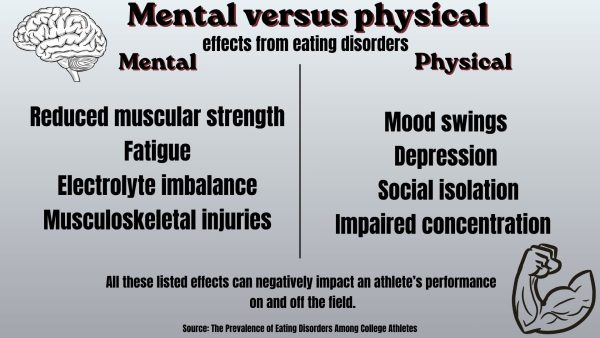
Ironically, eating disorders in wrestling stem from a desire to dominate in a lower weight class, yet these habits worsen athletes’ performance. Disordered eating can cause reduced muscular strength, fatigue, electrolyte imbalance and musculoskeletal injuries, along with a multitude of other effects. Not only can eating disorders cause physical complications, but they can also affect an athlete mentally, through depression and anxiety. Other mental effects of eating disorders include mood swings, irritability, social isolation, sleep disturbances and impaired concentration, which can indirectly affect athletic performance.
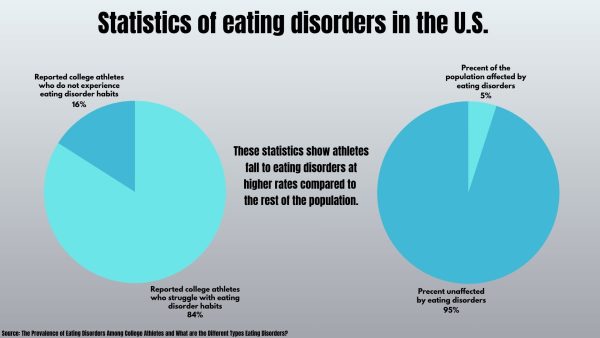
Eating disorders involve a toxic relationship with food, weight or body image, which may drive a person into compulsive behaviors. Over time, behaviors such as restrictive eating, excessive exercise or unhealthy weight-cutting practices can develop into conditions like anorexia nervosa, bulimia nervosa or binge eating disorder. Eating disorders affect up to 5% of the population and 84% of college athletes have experienced disordered eating habits. Athletes often receive praise for “discipline” and “physical control,” which masks early signs of disordered behaviors. Eating disorders take on a multitude of shapes and forms and influence people daily, so it remains important to stay informed and choose healthier options.
Raising awareness about the negative outcomes of eating disorders within wrestlers serves as a critical step in changing toxic sports culture. A multitude of harmful practices persist because athletes and coaches normalize such behaviors, typically passed down from older generations. By educating athletes, coaches and parents on the physical and mental risks associated with such behaviors, the stigma around speaking out and avoiding extreme weight loss could significantly reduce. Awareness programs can promote healthier alternative habits, even emphasizing performance over weight class, along with encouraging open conversations amongst athletes, parents and coaches, conversations that could create healthier athletes for years to come. When athletes begin to understand that proper nutrition fuels their bodies, providing increased strength and endurance, they will only improve in their respective sport. Increased awareness could also lead to strong intervention from organizations, such as the NCAA or the Georgia High School Association (GHSA), enforcing safety. Over time, shifting the focus from balancing weight to maintaining overall health can help redefine the term success within wrestling.
“Some early warning signs include using workouts to ‘make up’ for eating or burning calories to ‘earn’ food. Skipping meals regularly or making excuses not to eat or cutting out entire food groups without a medical reason. One change that I would like to see in sports culture is that lighter is not always better. Muscle is what will give you more speed, power, force, height and eating very little food will never allow for muscle growth or improved performance. Overall, focusing on fueling to perform and making body composition changes in a healthy and manageable way should be the focus rather than temporary drastic measures that are unhealthy and hurt performance,” Registered Dietitian Nutritionist (RDN) with a Master of Science (MS), Megan McCann said.
While wrestling offers numerous benefits, such as discipline and personal growth, the culture surrounding weight cutting within wrestling presents extremely harmful risks to an athlete’s health. From the pressure to compete at a certain weight class to losing weight unhealthily, wrestlers have adopted harmful practices that can result in long-term and short-term health issues and diminished athletic performance. Although organizations in the past have placed rules and regulations over the sport in attempts to control the harmful weight habits, lasting change requires help from all parents, coaches and athletes. By promoting safe practices and increasing awareness of the dangers associated with extreme weight loss and cutting, the sport of wrestling can transition into a culture that prioritizes health. Ultimately, protecting athletes should remain the top priority, ensuring wrestling stays competitive and the safety of all competitors remains vital.