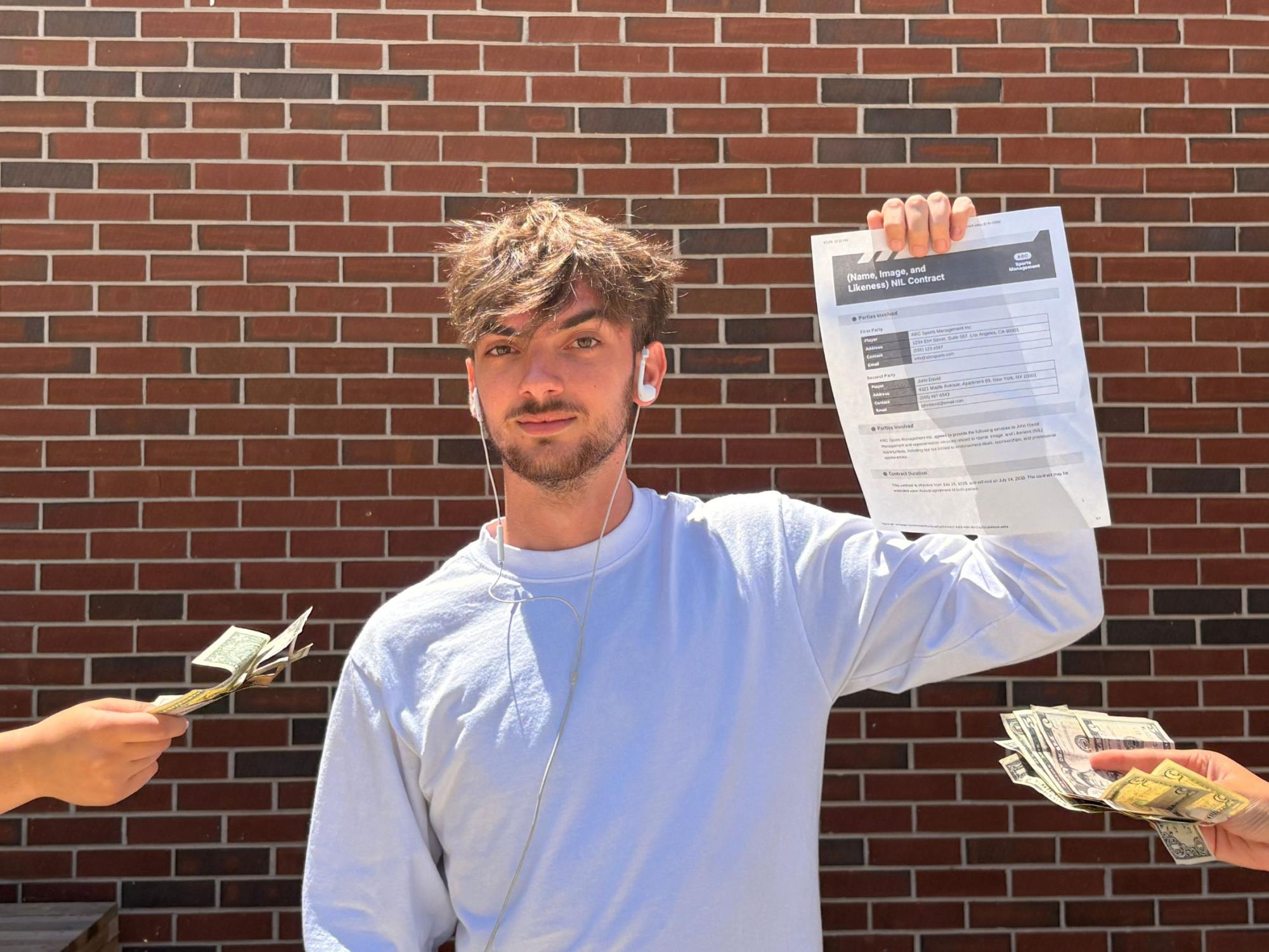

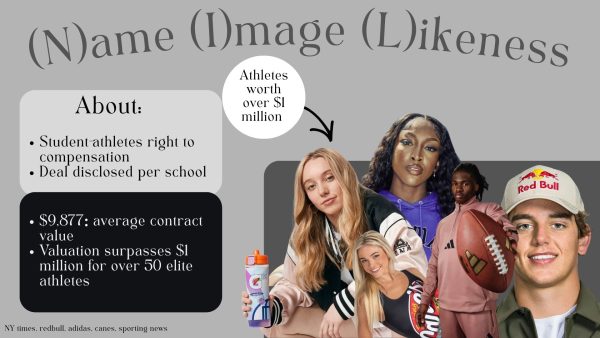
The world of collegiate sports has transformed into an oasis for sponsorships, sports betting and for student-athletes to thrive and increase their cash flow. Amongst the NC community, dozens of athletes sign to play at the collegiate level and continue their passions, with fans of these players possibly following their journey on the next level. With the excitement of signing, however, NC athletes–and high school players as a whole–will now attempt to navigate their collegiate journeys surrounded by fans, wagers and the potential promise of increased compensation. Sports fandoms across the U.S. continue to transition from exciting leisure activities to sources of income for fans, with deep engagement in sports gambling. Sports betting skyrocketed in popularity through the creation of digital apps and was eventually integrated into sports networks and professional leagues, marketing to fans as a whole. In addition to the rise in betting, Name, Image and Likeness (NIL) deals allow athletes to receive compensation for the brand deals they sign and every piece of merchandise their college or university sells regarding said athlete. Items including jerseys, t-shirts and posters highlight items sold in the shops such as the NIL Store. Before the adoption of NIL, colleges paid athletes under the table or failed to pay their talent as a whole. Now, with this set-up, college players can achieve millionaire status prior to signing their first professional contract.
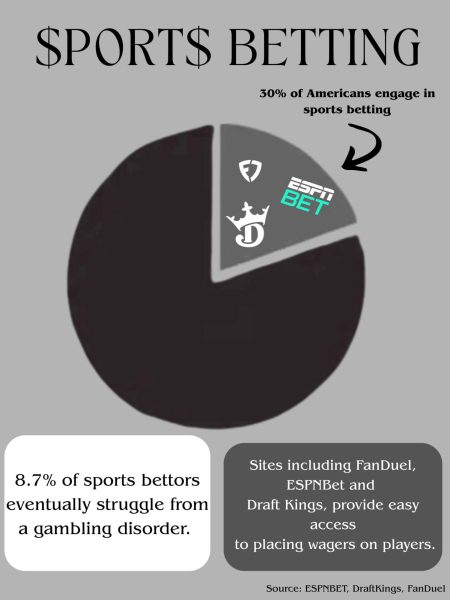
Sportsbooks, while not a new concept, crept to the forefront within mainstream sports media in the digital age in 2018 with the rise of online betting websites like FanDuel and ESPNBET. Approximately 57 million people own an account across all betting platforms. These websites combined the easy access of the digital age with the novelty of sports and amplified both markets to create an epidemic of sports gambling. Nevada began the trend of legalized sportsbooks in 1949, due to the popularity of casinos in Las Vegas. Following the legalization, the U.S. rapidly started to permit offshore betting, or books that do not maintain jurisdiction.
“One of the positives from NIL is that the market is setting values for various student athletes across sports. This is the first time the open market has been able to set such values, which tell us about the financial power of college athletics. Gambling is illegal, and student athletes know that. Only a few bad apples are making everyone else look bad,” University of Arizona professor of industrial engineering Dr. Ricardo Valerdi said.
The widespread reach of sports gambling drew the interest of celebrities and high school students alike in the U.S., resulting in around $245 billion dollars spent on sports betting since 2018. For example, pop star Drake notoriously lost around $5 million due to faulty bets on National Basketball Association (NBA) games. Similarly, bettors as a whole lose 7.6 cents per dollar wagered daily on diverse betting websites. Recently, underage sports betting spiked in interest amongst teenage fans. Studies from the Journal of Gambling Studies show that 33% of people placed a sports bet prior to turning 21. The line between the wagers and the actual games played continues to blur following professional leagues partnering with betting apps to provide live odds during games.
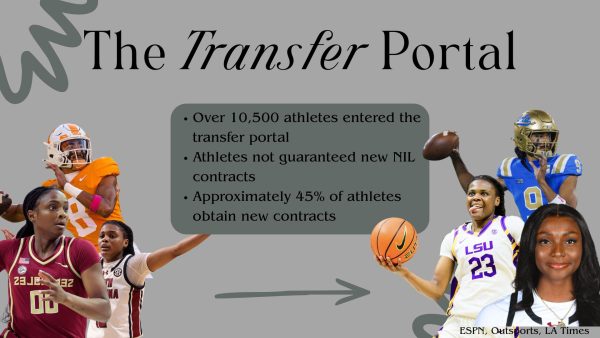
Regarding high school athletics, student-athletes encounter growing challenges regarding recruitment. As a result, bettors place wagers on their performances, resulting in coaches’ criticism. With NIL, coaches started to lessen the recruitment of high school athletes. Since 2021, the landscape of college recruiting has now included semi-pro contracts and an extensive, at times invasive, relationship with sports media. NIL contracts allow for elite high school athletes to receive further reward for their successes. Despite the advancement in compensation, with athletes earning money from their image, NIL contract disputes correlate to the spike in heavy traffic within the basketball and football transfer portals. Since 2021, athletes wishing to leave their program to enter the transfer portal now hold increased leverage during contract negotiations due to the increase of money invested in college athletes. In the 2024 fall season, University of Tennessee (UTK) quarterback Nico Iamaleava (9) led the Volunteers to a (10-3) team record and a trip to the College Football Playoffs (CFP). Despite the accomplished season, Iamaleava entered the renegotiation process for his contract, seeking around four million dollars for the remainder of his time. Coaching staff at Tennessee strongly discouraged the idea of paying Iamaleava the money he requested and subsequently allowed the quarterback to transfer to the University of California, Los Angeles (UCLA). The dispute drew attention from national media and harsh criticism for Iamaleva.
Media critics attribute Iamaleva’s departure to the increased demand for compensation as other athletes, such as Texas quarterback Arch Manning (16), are receiving deals north of $1.5 million dollars. The movement in the portal allows gamblers to wager on teams based on incoming talent, therefore extending the pressure placed on athletes. The transfer market heavily fluctuates and influences the amount of wagers placed on teams. Websites such as Kalshi predict destinations where players could land, emphasizing the pressure on students to perform and commit to a certain school.
“Then [teams] see how they’re going to build a roster. [The transfer portal] is similar to [finding] an unrestricted free agent. You have the athletic director and president who know football; that’s going to matter. They bring in the money and the players from the portal to form a winning roster,” co-host of the NIL Clubhouse podcast at Syracuse University Dr. Rick Burton said.
The snowball effect of collegiate athletes’ contract disputes occasionally hurts draft stock. Professional teams watch the behavior of players while in college and try to avoid drafting them in order to prevent future disputes. Rutgers star basketball guard Ace Bailey (19), saw his draft stock decline after expressing a disinterest in certain teams drafting him. Bailey’s agent, Omar Cooper, fueled the disinterest by coercing him to refuse full draft participation. Bailey later fired his agent and started fresh with the Utah Jazz (17-65). While player autonomy created a market for player advocacy, the lack of regulation continues to result in similar quarrels.
An additional change in collegiate athletics, sponsorships contribute to college athletics’ monetary development. The National Collegiate Athletics Association (NCAA) recently permitted colleges to place brand logos directly on athlete jerseys. The logo placement will mirror that of professional leagues, which also flaunt up to two companies on their jerseys. Sports fans, specifically fans of college athletics, feel disheartened by the extensive commercialization of sports. From an economic standpoint, the patches will generate millions in revenue to help allocate funds to the school’s athletic department. Sports marketing in college sports has benefited from the world of sports betting through an increase in overall cash flow.
The process of new economic policies in the college world trickles down to high school recruitment. Athletes find themselves negotiating deals before their signing, and the recruitment process starts as early as freshman year. Prior to the process, students compete at the highest level and eventually land in rankings amongst other athletes that play the sport both in their state and nationally. As a result, rankings become competitive, especially as the senior year approaches. Schools with state championship-caliber teams attract the highest talent. Locally, the Buford High School Wolves (15-0) won the 2025 MaxPreps national championship. The city of Buford spent $62 million to build the school’s new football stadium, proving the effectiveness of investing in high school athletics. Around NC, elite athletes such as sophomore running back Zach Belyeu (8), travel through the recruitment process and receive offers from dozens of Division 1 (D1) schools.
“[Recruiters] tell me how good I am as a player, and I appreciate that because I am trying to get better day by day. I also try to give love to my community and show that I am a great athlete. [The recruitment process] has been great, I have 36 plus offers right now, and I’m just trying to stay on top of my schoolwork and my overall performance so that I can maintain those offers,” Belyeu said.
The investment that Buford placed into the football team symbolizes the increase of investment for high school sports. Recruiters understand that with new NIL policies and the increase in the transfer portal, recruiting and maintaining talent becomes difficult. Coaches treat high school recruitment with extended care and invite top athletes to the schools for unofficial and official visits. These visits help the student picture themself at the school for both athletics and academics. Student-athletes will thrive with the proper investment from coaches and aid in the chance to maintain their talent.
NIL’s link to sports betting has caused friction amongst players, teams and fans. Fans voiced a rise in distrust and a lack of integrity during the games due to professional league partnerships with gambling websites. For college athletes, bribes from gamblers looking to earn extra money notably spiked during the current age of NIL. Prior to the modern era, the City College of New York (CCNY) men’s basketball team notoriously accepted bribes from gamblers to alter game scores. Players then manipulated games to allow for a decline in variability regarding the moneyline. The team, which won the 1950 National Invitational (NIT) and NCAA tournaments, struggled to regain prominence and was later demoted to NCAA Division Three (D3).
Locally in 2026, the Kennesaw State University (KSU) men’s basketball team fell victim to a point-shaving scandal. Police arrested star guard Simeon Cottle (5), along with four other active college players, for accepting bribes from bettors. Athletes purposely underperformed in order for gamblers involved to cash in on the athletes’ points scored with higher accuracy. The NCAA placed Cottle, the team leader in points per game (PPG), under suspension as the Federal Bureau of Investigation (FBI) further investigated his involvement.
As the ways fans consume sports evolve, so will the methods players, teams and leagues present them. The resolution to the school’s failure to pay athletes allows these students to adequately train and control their brand. While NIL aids in athletes’ success, sports gambling simultaneously leads to instances of a lack of athletic integrity. The transfer portal, along with team sponsorships, also provides an athlete with autonomy not previously possessed in seasons past. Through the rise in NIL, the transfer portal and sports betting, collegiate sports continued to evolve and operate as a semi-professional league.