



The art of journalism holds the power to quench humanity’s thirst for exploration. Responsibility promotes power, and in the sphere of newsharing, an ethical and thoughtful approach remains necessary. To combat unethical reporting, journalists adhere to several standards and principles to maintain ethical news reporting. Unbiased journalism remains a foundation for democracy, supplying individuals with knowledge about current political events and allowing citizens to exercise sound judgment.
Thousands of journalists and news organizations define the standards they follow as journalistic integrity, or the commitment to present the public with accurate information, following several rules. Journalistic integrity is separated into five main pillars: truth and accuracy, independence, fairness and impartiality, humanity and accountability. Truth and accuracy promise that journalists will provide trustworthy information. Independence claims that all work created by journalists will remain uninfluenced by previously created works. Similarly, fairness and impartiality offer unbiased information and an equal representation of all parties involved in an event. The principles of humanity and accountability promise an empathetic approach to reporting and a professional strategy to resolving issues if journalists fail to maintain the proper ethics. The practice of journalistic integrity can contain hundreds of other standards, but the five pillars create a digestible explanation of reporters’ roles.
Throughout the past three decades, social media use has multiplied exponentially. With millions of individuals and the majority of young adults spending nearly five hours a day on social media, the art of journalism faces a depletion of active audiences as physical newspapers and literary magazines disappear in the whirlwind of constant online stimulation. Users can access social media around the clock, anywhere in the world, at any moment. On the other hand, offline news outlets rarely can access the resources necessary to post 24/7 coverage and entertain their audience with a diminishing attention span.
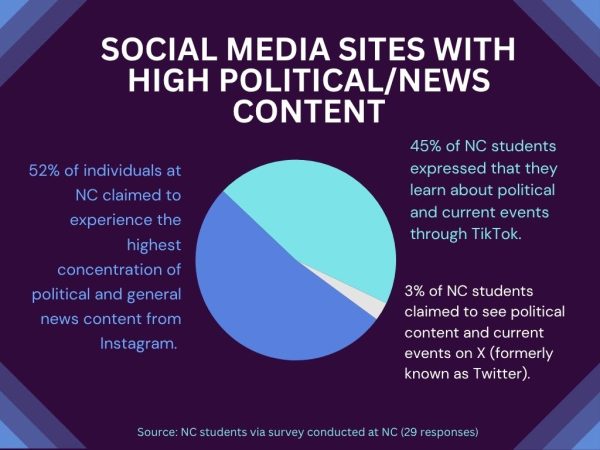
To combat the loss of patrons, journalists have immigrated to the online sphere. Previously, journalists migrated from newspapers to television networks and from television to online websites, with each platform change contributing to transformations in the art of journalism as a whole. Each transition of journalism to a new platform brought about subjective pros and cons. The current switch to social media has allowed for news to become accessible worldwide, yet it has uncovered new issues regarding the fast-paced environment of the online world.
“The change of journalism has been a slow revolution; it started with the popularization of the internet, which by now is 25 years ago. As the internet became popular and a means by which to get news, a lot of these legacy news organizations didn’t know how to monetize it or build it as a business model, so they released everything for free. It was just hard for these organizations to make any money online, so that’s what kicked off a revolution of how people get their news and who produces news for the internet. Then a lot of these start-up, entrepreneurial blogs were happening in the early 2000s, like the Huffington Post, so anybody and everybody could just set up a blog, and that drew attention away from places like The New York Times or The Washington Post,” University of Alabama Associate Professor and Director of Graduate Studies for Journalism and Creative Media Elliot Panek, Ph.D. said.
Social media algorithms promote content to earn the highest rates of engagement. In a majority of situations, sensationalist and biased content earns increased viewership when compared to nonsensational and dignified content. In hundreds of cases, sensationalist content contains a 40% higher chance of obtaining prevalence in an online environment than neutral, factual content. Similarly, social media algorithms value immediacy. Any individual, journalistically qualified or not, can post on social media, and content created closely following an event will earn higher audience engagement due to algorithm promotion. On the other hand, fact-checked and accurate information may need a longer timespan to create, causing immediate content to outcompete fact-checked, quality journalistic posts. Recognizing these trends, reporters who do not adhere to journalistic standards may obtain popularity and higher engagement than those who follow standards and ethics. Overall, social media creators that post sensationalist, emotional and consistently inaccurate content continue to cultivate an environment within which feedback loops emerge and content adhering to journalistic ethics lies low.
Journalistic standards exist for the sole purpose of limiting the spread of false information, unethical reporting and other consequences that currently emerge on social media. Harmful content spreads like wildfire, hate speech flies under the radar of social media moderators and misinformation and disinformation impact the worldviews of users daily, as up to 86% of online users see fake news daily. If content creators followed the journalistic ethics provided through hundreds of resources, all of these instances would lack their current prominence
“All mass media, whether old-style newspapers, television, websites, or social media, compete for audiences’ attention. As such, all media are subject to pressure to highlight content that will attract attention. Social media algorithms are highly effective at identifying content that will attract attention and adapting the content stream to achieve that goal. The goal of attracting attention isn’t new. The strategy of reporting sensational content isn’t new. What is new is the degree to which content can be targeted to attract and control attention, even at the level of individuals,” University of Alabama Dean of Communication and Information Sciences Brian Butler, Ph.D. said.
Regardless of the opinion of an individual, all people remain susceptible to propaganda and biases — especially when their daily routines consist of using a device that feeds them evidence to support their biases. With the faces behind social media earning money when individuals use digital communities, interact with content and share it with others, engineers program platforms’ algorithms to keep users online for prolonged periods. These algorithms consistently find that rage- and emotion-fueled content equates with high audience engagement. Not only does highly distressing content, such as ragebait or fearmongering, negatively influence individuals’ mental health, but it also reduces the motivation for individuals to fact-check information due to cognitive overload and fatigue. 62% of internet users see content they consider untruthful or doubtful weekly. Up to 80% of individuals face cognitive overload online daily, indicating the powerful reach of the internet in their current lives.
Finally, when individuals interact with non-journalistic standard content, they fuel their personalized algorithms and create echo chambers of misinformation. Echo chambers use filter bubbles that guess the posts that an individual may want to see, promoting content that aligns with the beliefs and biases of the individual using the online forum. Unlike ethical journalism, which uses the fairness and impartiality standard, echo chambers cause opposing viewpoints to remain unseen and unheard, causing real events to seem skewed in an opinionated direction. These information chambers contribute to political polarization as they provide users with intensified and dramatized points of view and a reinforcement loop as users see content providing evidence based on their biases.
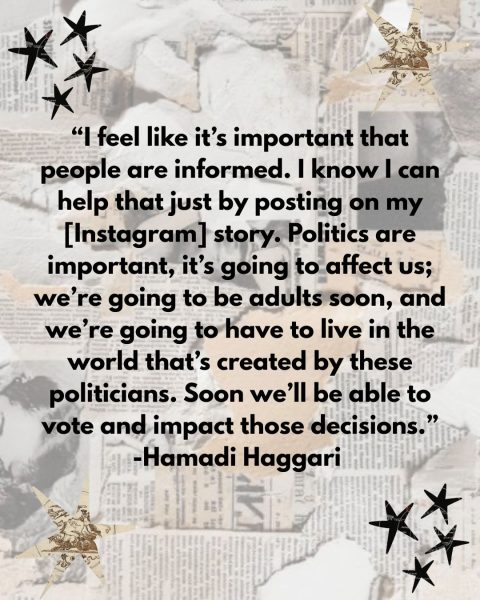
“The more informed we are, the better decisions we are able to make based on that information. Whenever there is a post specifically relating to some kind of information or data, I’ll independently go and search that up from news articles. Typically, I’ll look at who reports on it to see if they have a bias on the situation. That’s how I usually will check if information is true,“ junior Hamadi Haggari said.
Fueled by fear, anger and confirmation biases, the brains of social media users suffer from an overload of information, reducing their ability to think critically. Those influenced by social media’s algorithms may not desire detailed information, as they satisfy their thirst for knowledge through the posts that arise seemingly unintentionally on their feeds. This lack of want and ease of access to information contributes to the feedback loops created on social media. Additionally, with such high exposure to emotional content, individuals become susceptible to misinformation and disinformation and share such content, contributing to the untrustworthiness of online sources.
“It is not possible to ‘stop’ misinformation and particular news content. We have a variety of ways that it can be controlled, directed, contained and avoided. Liability and slander laws are part of that. Freedom to create press organizations/streams that have different principles and editorial standards and freedom of individuals to read the ones that provide the approach they value are also important. Journalists having professional training and being able to describe how they work and why is also important. While it is tempting to respond to flawed news content with the desire to stop it, the principle underlying the First Amendment is that controlling, limiting or stopping information sharing is something that should be done very cautiously. It is for that reason that having individuals and organizations who advocate for and apply strong principles is now more important than ever,” Butler said.
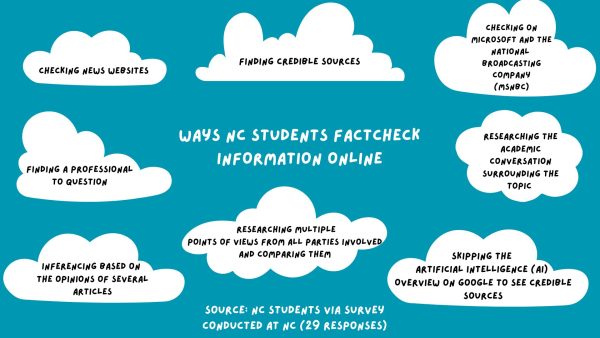
Social media presents its pros and cons on social influence, weaving its way into global culture and society as it racks up users daily. With its influence, individuals should remain aware of methods to consume and create information responsibly through fact-checking and critical thinking. Journalistic standards and ethics keep online spaces safe from fake news, and if social media platforms implement protocols that enforce stronger ethics and standards to maintain journalistic integrity, electronic hubs may face improvement. Social media’s future remains uncertain and unquantifiable, but it will certainly continue to transform as generations grow up with it.