



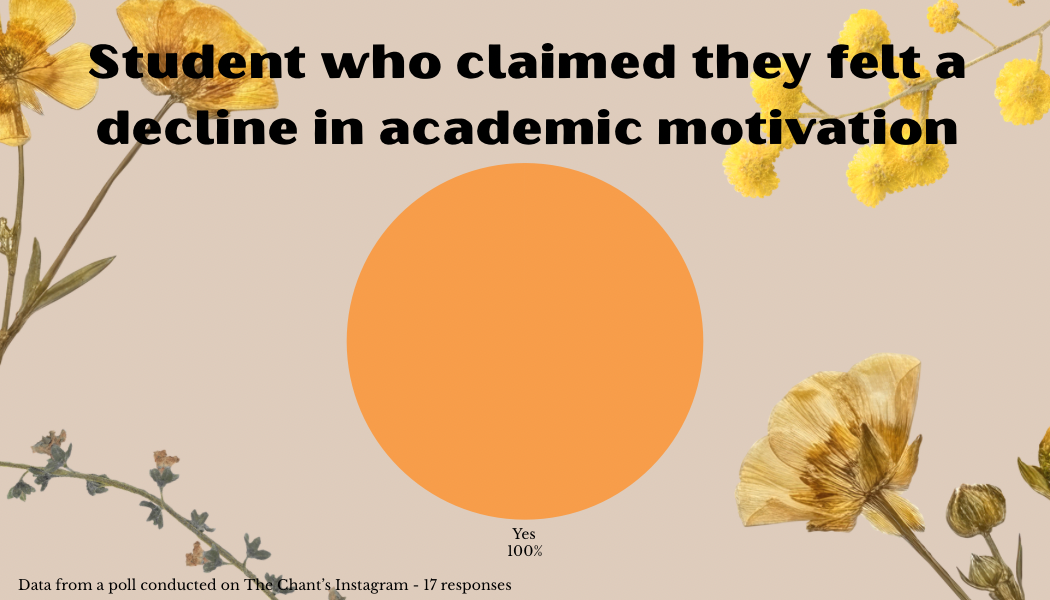
Sold to the eldest K-12 scholars in vials labeled “Why bother?” and “I already committed anyway,” senioritis poisons the student bodies of high schools across the nation. Zombie-like 17- and 18-year-olds walk the halls two or three days a week, their homework undone and their mechanical pencils leadless. While this phenomenon of a drop-off in motivation indubitably exists, the real issue lies not in a complete lack of, but a redirection of motivation. Disinterested in the schooling they know has lost its consequence, the goals become interconnected and preparation for success beyond high school.
For those unclear about the definition of this theoretical affliction: senioritis typically causes high school seniors to let their grades drop as they procrastinate on assignments and other educational activities. As these students begin showing up late, or not at all, their curtains of general disinterest in high school might only fall away for special occasions and, if their teachers luck out, finals.
“I have bad senioritis. I turn most of my assignments in on time, but I get very lazy sometimes. I put my energy toward work or social gatherings, and I get more time to rest and relax. I’ll have better memories from senior year because I’ve made memories with people I love and care about. One of my favorite memories was helping set up the Hispanic heritage party and how I was hanging out and dancing with my friends,” senior Aira Khan said.
For seniors, the final five months of high school define the end of childhood, and the choice of fully enjoying that time might usurp the importance of school. Spending time with childhood friends, visiting beloved parts of town or enjoying once-dormant hobbies grow into priorities for people who feel confident in their futures and want to carry quality memories into them. This desire to create a perfect last hurrah does not represent a lack of care for school, but a goal to use time in school as a means to fully experience the freedom and youth that shift away after graduation.
Additionally, the energy not spent on math homework or required reading frequently finds a new home in future planning. High school seniors look into housing and parking options at the universities they’ve committed to, attend tours of the colleges that admitted them and deep-dive into school social media pages and websites to find activities they would like to join once they enter the campus. The upcoming graduates without plans for higher education work tirelessly on job applications, sort out their future living arrangements and otherwise prepare for adulthood. These activities hold deep importance and their necessity overrides the day-to-day responsibilities seniors might discard.
“I definitely feel like I have senioritis sometimes. It’s harder to stay motivated with assignments, especially when graduation feels so close. I still get my work done, but I don’t stress over every little thing the way I used to, and sometimes I procrastinate more than I probably should. I’ve definitely been thinking more about my future lately. Whether it’s college, career goals, or just what I want my life to look like, it’s been helpful to reflect and plan. It makes me feel more prepared and gives me something to look forward to, which helps balance out the stress of finishing high school. Most of my favorite memories are definitely working the games through sports medicine, even just doing after-school duty with the players or chorus concerts,” senior Lisa Scranton said.
Teachers, parents and even a select group of seniors might argue that senioritis genuinely does arise simply from lazy disinterest in school, or even mental health problems. While everyone experiences the lull in motivation differently, this outlook discounts the fresh to-dos and excitement that life plops on seniors’ plates. A disinterest in academics does not reflect a disinterest in success. Instead, seniors re-evaluate their priorities and find that their relationships and futures gain nothing from the energy they might otherwise expend toward an A+ rather than a B.
Regardless of its purpose, one message to take away as senioritis climbs up the legs of beloved seniors and into their minds remains: the temporary drop in motivation rarely becomes consequential. Unless the student fails a class, harms another person or manages to earn themself a criminal charge, the brief falter will ultimately hold no long-term negative impact. As heads turn away from tests and projects, a lifetime comes into view, so initiating that future with a truly enjoyable stint promises reward.


