
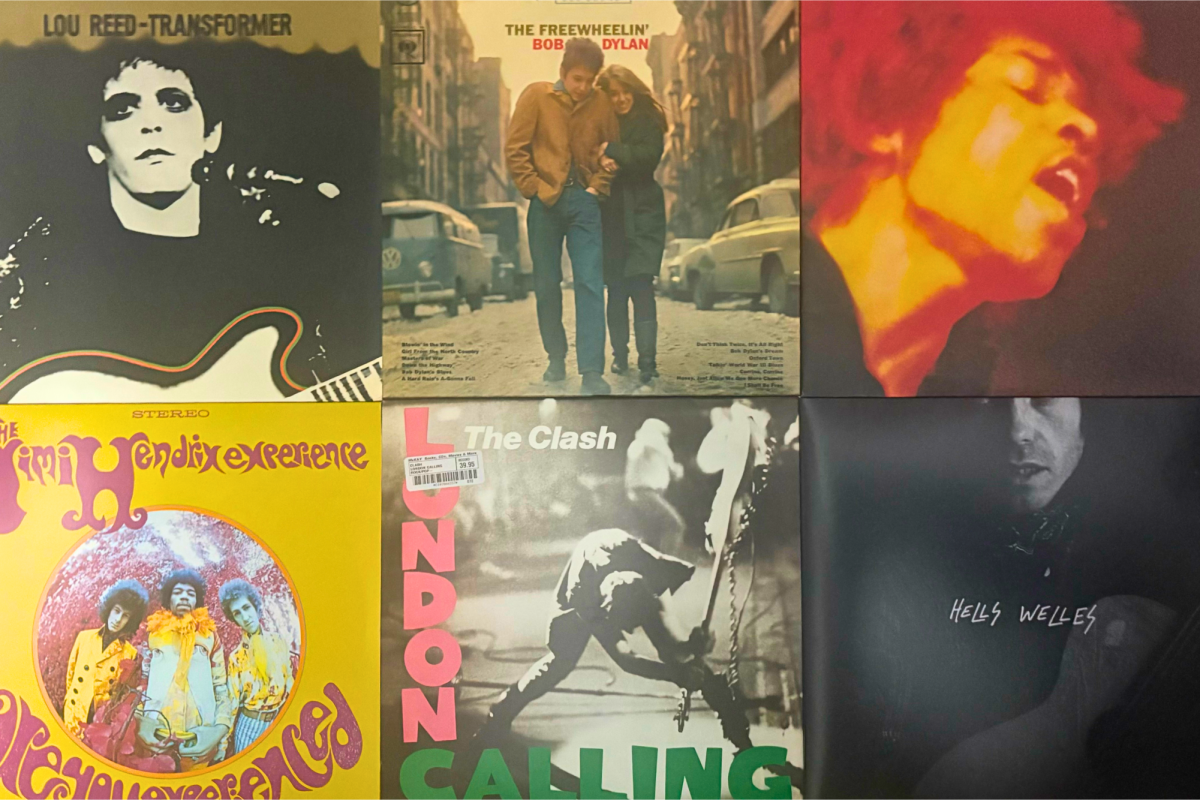
The turn of the century prompted yet another shift in the American youth’s outlook on the world. Issues surrounding 9/11, the Me Too movement and an increasingly toxic political culture left those freshly entering adulthood distraught. As such, musicians speak to the upset. In this century, protest music emphasizes anger toward an inhumane government and culture. The subgenre calls for both radical love and radical change.
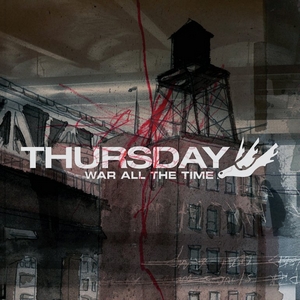
The 2000s: “War All the Time” by Thursday and “American Idiot” by Green Day
The new millennium kicked off with a brutal blow to American culture, politics and international affairs: 9/11. This terrorist attack prompted several increasingly complex war involvements in the Middle East, a decline in American privacy protections and an uptick in racist rhetoric. While the threat of a repeated attack loomed overhead, political tension at home and the same-old issues of racism, sexism and similar systemic issues left young people struggling to find stability. While young activists rallied for peace or privacy, others found safety in community, and both groups fought against an established norm in one way or another. In light of this fight, emo, scene and electronic dance music (EDM) picked up, a transition both eased and popularized by increasing internet connectivity, while pop music, such as Britney Spears’, called for female empowerment, love and joy in the face of these struggles.
Easily assumed from the battling title, Thursday’s third album describes the questions of American youth about their identities as overseas conflicts escalated. “Division St.” brutally takes a magnifying glass to America’s hate. As undocumented youth began to rally around the Development, Relief, and Education for Alien Minors (DREAM) Act and post-9/11 trepidation around Muslims reminded the nation that racism persists, Thursday reminds their listeners to challenge their own outlooks. The band pushes this message further with the critical position they take on the media in “Signals Over the Air.” As the album wraps up with “M. Shepard” and “Tomorrow I’ll Be You,” Thursday reminds audiences that, though war persists, they can engage in resistance. In this era, millennials again shifted left. Americans elected President Barack Obama and the American Civil Liberties Union (ACLU) expressed concern with the 2001 Patriot Act and its 2003 sister bill, Patriot Act II. These happenings evidenced the desire to rethink American hatred, imperialism and surveillance.
Green Day’s “American Idiot” uses pop-punk instrumentals to bring accessibility to protest music. While their recent refurnishing of the titular song — replacing the lyric “I’m not a part of a redneck agenda” with “… MAGA agenda” in modern performances — brings the album directly into the modern political sphere, it held a deeply modern message for the dissatisfied youth of 2004. Chiefly criticizing Christian nationalism, propaganda and war, Green Day calls young people to think critically about the media they consume. In “Holiday,” the band sarcastically glorifies war with lyrics such as, “Hear the drum pounding out of time/Another protestor has crossed the line/To find money’s on the other side/Can I get another Amen?” As rebellion became a resistance to privacy invasion and the maintenance of individual thought in America, Green Day produced anthem after anthem for the battle of minds against the government.
“In the 2000s, America was going through a pretty tough time, resulting in a shift of patriotism, leading to rock increasing [its push] against America (kind of what rock has been for a while), but ‘American Idiot’ was a catalyst to the anti-American push. I think now the lyric changes are fit to fit the current problems within our country, and to remind the population not to fall into the traps the government is setting up and to stay true to themselves. My favorite song on the album is probably ‘Jesus of Suburbia’ because it’s a little over 9 minutes long, but explores so many song styles within that time that it feels like you’re listening to your own little mini album. It definitely resonates with rebellion because it uses how people blindly follow religion to explain how people blindly follow the government, then brings up points of distress and suffering from war to starving children to prove that the government doesn’t care for the well-being of the citizens, but for the money in their own pockets,” senior Olyvia Graham said.
The 2010s: “We Got It From Here… Thank You 4 Your Service” by A Tribe Called Quest and “Born This Way” by Lady Gaga

With the 2008 recession still reverberating through the economy, the Me Too movement picking up steam, the nation legalizing gay marriage and politics schisming — with ongoing war, the 2016 election and beyond — the state of the nation became a seat for both celebration and tension among youth. The music, therefore, understandably followed suit. Increasingly conservative, even intolerant, rhetoric simultaneously gained prominence in the Republican party, and persisting, while regulated, protection for environmentally detrimental industries resisted work spearheaded by teenagers such as Greta Thunberg. This pushback conflicted with these wins for progressives and encouraged still unsatisfied revolutionaries to rally young people against complacency.
A Tribe Called Quest, a hip-hop group which rocketed to stardom in the 1990s, released their 2016 album in the light of a shaky election year, the increasing visibility of police brutality and growing fire behind prejudiced political policies. Songs such as “We the People….” address gentrification, classism, homophobia, racism, sexism and Islamophobia. The record defines unconditional love and unity as necessities for happiness — both individually and across society. The deeply intelligent lyricism touches on the persisting inequity in American society and begs listeners to set aside their stereotypes and prejudices to recognize that when everyone receives healthcare, education and basic needs, American society will fulfill its potential. Like any quality protest album, this honest, modern collection of songs builds a basis for unity, a message that became pertinent in 2019 and 2020, especially. In these years, the Black Lives Matter (BLM) movement took off in reaction to George Floyd’s brutal killing and a pandemic-isolated society turned to the internet to normalize different backgrounds and lesser-known LGBTQ+ identities.
2011’s “Born this Way” takes a celebratory tone in the midst of the fight for gay rights and sexual and reproductive autonomy. With dancing, electric sound influenced by disco and Europop, Gaga uses the album to call back to both genres’ historically inclusive roots. Supporting individual identity despite social and religious conservatism, Gaga’s album became part of the soundtrack for gay pride. Although the Me Too movement had not yet reached its peak of global saturation, Gaga’s embrace of her own sexuality, paired with an upbeat lyricism, would set a tone of exploration with consent that persisted throughout the decade. Gaga reminds listeners that a willingness to express oneself 100%, and to do so joyously, inherently rebels against bigotry.
“Nowadays, the album still resonates very strongly and stands as a reminder of progress being made, and still today, it receives backlash. The message of self-acceptance and embracing being different still fits ongoing conversations around identity and mental health, and continues to stand as a pride staple and was played at pride events worldwide. It amplified and pushed for marriage equality and anti-bullying. Gaga specifically went out and spoke at LGBTQ rights rallies. Gaga rebelled against the norm by mixing pop with more ‘masculine’ genres like rock and heavy metal and directly challenged religious conservatism with one of her most popular hits, ‘Judas.’ She reclaimed the sinful ideas around sexuality and transformed them into empowerment. The album’s core idea is anti-conformity and celebrates the outcasts, and it’s great that Gaga used her massive platform for LGBTQ and feminism advocacy, making ‘message music‘ mainstream pop,” junior Rileigh Fink said.
The 2020s: “Hells Welles” by Jesse Welles and “My Back Was A Bridge For You To Cross” by ANOHNI and The Johnsons

The current political, economic and social state of the nation stands on shaky ground. War involvement in the Middle East shakes pro-peace activists, especially given the reported genocide of Palestinians by U.S.-backed Israel. At the same time, the two-party system continues to pull Americans to opposite ends of the spectrum on issues such as immigration and healthcare. The BLM movement persists, the cost of living multiplies and class controversies and the predation of young women become magnified with the release of the Epstein files. America’s youth, struggling to keep up with the endless stream of news that floats past their eyes on social media, now turns to nostalgia, both as an escape and a motivator for action. Folk rock recaptures audiences in indie spheres while musicians across all genres harken back to the protests and mobilization that paired with the sounds of the 1960s.
Fast-rising folk musician Welles gained his fame courtesy of social media as he performed his biting, critical and doubtlessly political songs with an acoustic guitar in hand beneath nondescript powerlines of Arkansas for the audience behind phone screens. His first full album, 2024’s “Helles Welles,” exemplifies the stripped-back anger experienced by young people toward their leadership. Later, songs such as “No Kings” implore people to engage in protests, strikes and resistance to the plethora of government action he ideologically opposes, but this seminal album emphasizes the anti-war sentiment that boomed in popularity among youth with increasing coverage of the conflict in Palestine. Pieces such as “Whistle Boeing” call attention to corporate corruption and mysterious journalist deaths, seeding a distrust for propaganda, corporatism and mass media in their listeners.
ANOHNI, a steady member of the alternative scene since 2003, drew inspiration from Marvin Gaye’s 1971 album “What’s Going On” in her own 2023 release. In parts of the album, ANOHNI seems to respond to Gaye’s queries, reporting on love and hate in the 50-year interim. Though initially sounding like a collection of classic love songs, the desperation with which the artist sings lyrics such as “I don’t want you to be dead” eerily reminds the listener of the threats each person faces, whether from war or healthcare inequality. In tandem with these subtle hints, direct songs, such as “Scapegoat,” describe the abuse present in interpersonal relationships and society as a whole. ANOHNI reminds her listeners that the way they live each day defines their complacency in a system of oppression, and that radical love overtakes evil.
Across the span of time, music has spoken to the social happenings of the world it occupies. Playing behind school dances, on stage at packed festivals and in historic orchestra halls, these sounds reverberate through the world’s collective consciousness. As people stand up for what they care about, music becomes the spine that supports each movement.
Still, hundreds upon thousands of incredible protest albums haunt the backrooms of record stores and the unknowns of Soundcloud and even rest in the top listened-to tracks on Spotify each day. Though this article, paired with its first part, spans over half a century and a variety of the youth-led countercultures from that period, it still only grazes the surface of the anger, courage and joy young people express through the art they engage with. Finding the power to fight for a noble goal one cares about, however that goal may manifest, thanks to an album inherently marks that piece as a relevant, important and beautiful piece of art.
Read part 1, “From the 1960s to the 1990s: The popular albums which defined American rebellion in each decade,” here on The Chant!


