



As oceans warm, endangered species of fish face habitat disruption and harmful biological changes. Human-caused environmental issues such as increased greenhouse gas production, pollution and overfishing frequently lead to the disappearance and endangerment of vulnerable species of fish. Beyond a reduced supply of sushi, decreased fish populations also cause loss of biodiversity, altered ecosystems and reduced food supply for other animals. If humans choose to keep ignoring global warming, these increasingly difficult and complex complications will surely intensify in the future.
“It’s hard to say what species of fish are the most vulnerable to climate change, because whole ecosystems are being negatively impacted by climate change. I think the most vulnerable ecosystem is coral reefs, which are experiencing mass bleaching events due to the ocean getting warmer. A massive number of fish species depend directly and indirectly on coral reefs for food, shelter and reproduction. The bleaching and death of coral reefs is removing a vital support system for thousands of fish species and crashing fish populations globally,” Oceanography teacher Jason Evans said.
The oceans absorb roughly 90% of the excess heat trapped by greenhouse gases in the atmosphere. Fossil fuel burning through practices such as transportation, industrial practices, agriculture and deforestation contribute immensely to this increase as well. As the human population rises, so do the numbers associated with the amount of fossil fuels in the atmosphere. The rate at which the ocean temperatures increase has accelerated in recent years, from 32.108 degrees Fahrenheit per decade in the 1900s to 32.486 degrees Fahrenheit in the 2000s. As these numbers climb, scientists predict it will exacerbate the impact on the environment in areas such as natural disasters, shifting ocean currents and rising sea levels.
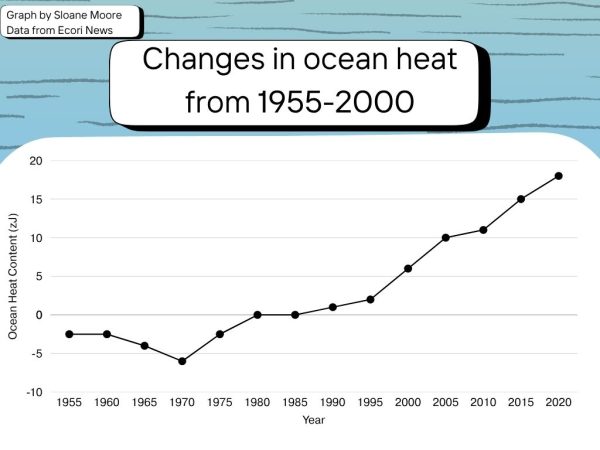
As ecotherms, a fish’s susceptibility to any variations in water temperature can cause immense stress or even death. When water warms, fish’s metabolic rate increases, accelerating their need for food. Elevated temperatures can also impact the way fish develop and reproduce, negatively affecting how they grow, their survival rate and reproductive success. These problems not only cause issues for the fish, but also for the environments they reside in as well. Coral bleaching, a result of excessive temperatures, destroys the habitats of marine animals, leading to a loss of biodiversity. These impacts also affect humans, reducing the food supply, creating economic hardship for fishermen and threatening coastal communities and cultures.
“I feel that Gen Z needs to spread awareness through social media, politics and [in] as many news outlets as possible. Research shows that there’s an inherent lack of cooperation between climate scientists and politicians. Further, research also shows that the general public is more likely to trust policy/facts that are heavily scientifically backed, which we are at a point where lots of research has been conducted. Through social media, these facts and data can be circulated and motivate a change. Getting these stories on the news will further spread awareness throughout the older generations. I feel that many past ‘campaigns’ failed due to a lack of cooperation between the younger/older generations, and this can bridge the knowledge gap,” magnet sophomore Sophia Chen said.
Individuals of all cultures, professions and societies understand the importance of protecting ecosystems and the animals that live within them. Fish in particular play an essential role in the natural world, and the vitality of preserving them proves increasingly pressing. Humans commonly act in the present, with little to no regard for how their actions could impact future generations of people and animals. Each bug, animal and human forms an incredibly intricate and interconnected ecosystem, one that relies on coexistence and balance. The responsibility of preserving the diversity of life falls to humans, yet all evidence shows that humanity persists as the main threat to it.