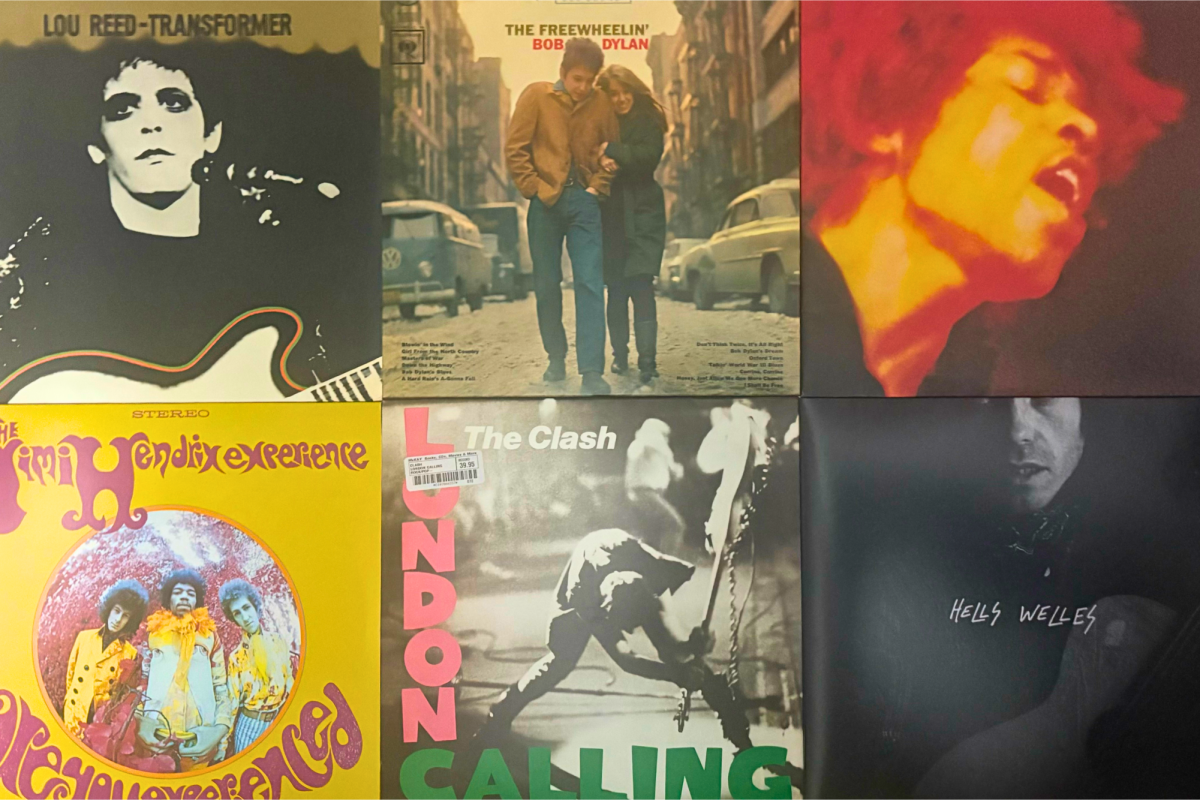



At the dawn of man, a drum beat echoed through the caves and forests society’s ancestors inhabited. Since that first snap of rhythm, groups have investigated innumerable ways to create music. This exploration birthed a unique sound for each culture, and this heritage-based form of song, regardless of the place it hailed from, now falls under the umbrella term folk music. In the U.S., folk leans on an early blend of European instrumental and musical history, African American innovation, Native history and the daily expressions coined by people on porches and in parlors. The modern interpretation of the style rests in its 1940s-1960s revival, a time when the increasingly political genre exploded in popularity. With names like Joan Baez, Woody Guthrie and Bob Dylan irrevocably tied to folk, its once daily presence in American life now interlocks with celebrity star power.
While folk music encompasses diverse melodies from Native American song to African American bluegrass and gospel, the image that conjures in a casual listener’s mind usually involves a black and white photo of a soloist, perhaps from Appalachia, with a guitar on his knee. The silhouette of this picture may have originated with a regular, old country bumpkin, but record stores sold it with the culturally groundbreaking melodies of the folk revival — that image echoes through today. Because of the faces attached to the accessible genre, the definition for folk narrows in on a specific sound rooted in the mid-20th-century scene; with the 2024 release of “A Complete Unknown” — a Bob Dylan biopic starring Timothee Chalamet — this view again reached the mainstream. Through this skyrocketing interest in historical folk music, though, today’s musicians see growing success.
“I see most of it [folk music] on Instagram, on my music account or on Spotify in the genre mixes. I interact with folk music by listening to it and playing it. Since folk is kind of guitar-heavy, I enjoy playing folksy songs/artists on my guitar. I play a lot of folk, think The Lumineers/Mumford and Sons, and folk pop, think Noah Kahan. Since my genre preferences change and fluctuate, it’s hard to pin down exactly when I’ll listen to more of a certain genre. I will say I do listen to more upbeat folksy stuff in the summer and more sad folksy stuff in the winter,” magnet senior Mary Washburn said.
Perhaps one of the forefront characters in modern traditional-style folk, Jesse Welles reached virality in 2024 for his raw voice, critical lyricism and simple instrumentals. His unpolished but heartfelt recordings resonated with viewers equally enraged with everything from “Cancer” to “Genocide Cake.” With his ever-increasing star power, Welles paved the way for other similarly stripped-back musicians to bear their outrage and warmth to the world. For example, Jodi Jones of the Sugaree String Society garnered unprecedented visibility with nearly 1 million views in July from an Instagram reel. In the post, she performs her unpublished song “AMERICAN DREAM,” criticizing the current state of the U.S. Like the 1940s’ melodies for socialism and the 1960s’ tunes for peace, these modern reshapings of the earlier folk revival reject a perception of folk as an unchanging piece of tradition.
Present interest in folk music steps beyond a husk of Appalachian classicalism and Lead Belly recreation. Genres such as folk punk and folk pop worm their way into Generation Z’s playlists left and right. These varieties still explore themes and sounds present in pre-revival, mid-20th-century and modern folk, but tend to increasingly experiment with the overall style. While new artists encompass these qualities, even existing names begin to replicate folksy styles, with Taylor Swift, Ethel Cain and Phoebe Bridgers all infusing their recent pop and rock work with the plucky simplicity of American folk. Whether listeners love massive industry forces such as indie folk pop singer Noah Kahan or niche creators just beginning their careers, these subgenres represent a new era as America’s landscape changes and its homegrown music follows.
Historically, a return to folk music moves in tandem with revolution. Music for people, by people tends to rally crowds into common sentiments, even when division pervades. Folk emphasizes human connection beyond the exchange of goods that takes a listener to a concert or buys him a record. Like all music, folk promises accessibility, leans on performance, and, ultimately, it unites people to a common cause.
“I definitely have found myself listening to more folk music in recent years. I think that several artists I know of have drifted into the folk genre or experimented with folk music, even including some famous pop musicians like Taylor Swift with ‘folklore’ and ‘evermore’ and Olivia Rodrigo with a few of her songs in ‘Sour’ and ‘Guts.’ I also think that there has been a rise in the popularity of folk artists, such as Noah Kahan and Jesse Welles. I think that the societal implications of this shift are that people are craving a realness and down-to-earth storytelling in the media they consume, which I think could be, on some level, due to the current political climate and lack of control people feel they have over their lives and futures. I think that folk music can serve as a sort of outlet for people, while also being a way to give commentary on things happening in the world,” magnet senior Marielle Parker said.