
As political tensions continue to spark controversy through communities across the U.S., constitutional literacy grows increasingly urgent. With numerous debates and overall national disagreement, no matter which administration holds power, understanding one’s rights proves vital because rights act as a civic safeguard. For students specifically, knowing the protections guaranteed under the U.S. Constitution can allow for increased participation in the democratic system and decreased uncertainty about authority.
The Bill of Rights establishes the core freedoms Americans can utilize in daily life. The frequently debated First Amendment protects rights including the freedom of speech, religion, press, peaceful assembly and right to petition the government. These rights form the backbone of protests, student activism and civic engagement, but commonly receive questioning because of their vagueness, which confuses all ages, leading students to fear utilizing their freedoms in a manner that causes them harm.
Younger citizens, such as students, commonly question whether they hold the right to protest. The famous court case Tinker V. Des Moines Independent Community School District helped resolve this gray area, as the court ruled that students maintain their constitutional rights even during school hours. This case involved students who wore black armbands in an attempt to protest the Vietnam War, resulting in school suspension. The court ultimately sided with the students and established the protection of symbolic speech as long as it does not cause a substantial disruption to the educational environment.
This precedent means that students who attend public schools generally hold the right to express their political views through clothing, distribute papers and may organize peaceful demonstrations — even though schools may place reasonable restrictions if a student’s actions disrupt class work or infringe on other individuals’ rights. A peaceful walkout, for example, remains protected by the Constitution, but students could still face disciplinary consequences for missing instructional time or disrupting the regular school day. The distinction that the First Amendment protects against government suppression of speech, but does not override school rules, proves important for students to note in order for their actions to remain within the guidelines of their district.
“We learn a lot about our amendments, our freedom of speech and everything in government classes, so I think it is important that students know their freedom of speech. Students should know that as long as it’s not harmful to somebody’s well-being, they should be able to say whatever they want about politics. For school protests, as long as it’s a peaceful protest and it’s not disturbing, then I think it should be allowed, and school administration should be able to monitor it safely so nothing harmful happens,” magnet sophomore Sonal Patel said.
At public colleges and universities, which fall under government jurisdiction, First Amendment protections grow broader. Students can host speakers, create political organizations and hold demonstrations, although the schools can enforce reasonable rules for time, place and manner to maintain safety and order. Private colleges, although not directly bound by the First Amendment, commonly adopt their own free speech policies as well to protect students’ specific liberties and rights.
Students should also understand their rights when encountering law enforcement officials. The Fourth Amendment protects against unreasonable searches and seizures, usually requiring probable cause or a warrant. In schools, administration may search a student’s belongings based on reasonable suspicion, but searches need to remain justifiable and not overly intrusive. The Fifth Amendment guarantees citizens the right to remain silent, and the Sixth Amendment ensures the right to an attorney and a fair trial, which applies to both students and adults alike. Through requesting a lawyer or stating they choose to remain silent, students can lawfully assert their rights.
The 14th Amendment guarantees equal protection under the law, which means public schools and state institutions should treat all individuals fairly and without unlawful discrimination. This amendment served as a key for major civil rights advancements and continues to shape debates about fairness in different facets of the government, including in education.
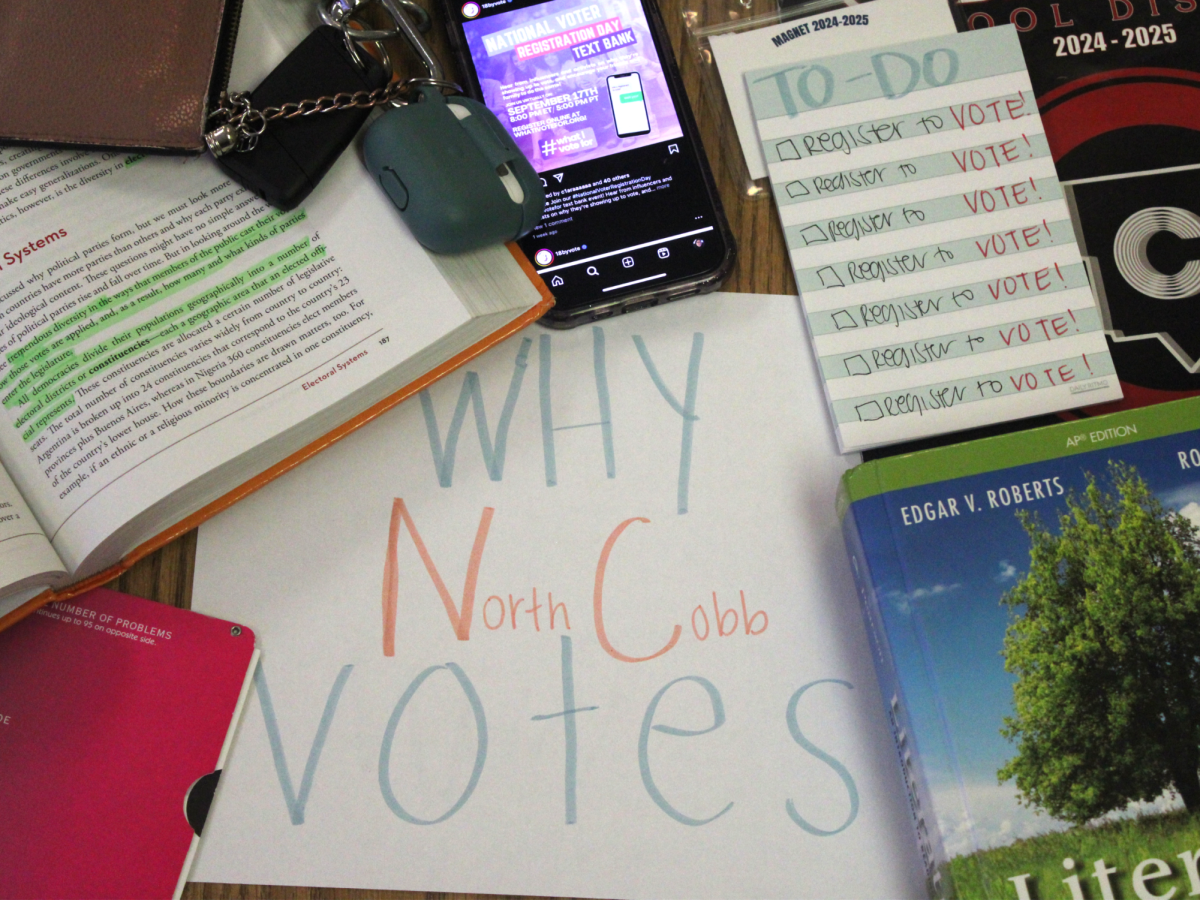
While protesting serves as one way to participate in a democracy, voting directly influences government policy. Several amendments joined together to expand voting rights, including the 15th Amendment, which banned racial discrimination in voting, the 19th Amendment, which granted women the right to vote and the 26th Amendment, which lowered the voting age to 18.
Ratified in 1971 during the Vietnam War, the 26th Amendment established that if 18-year-olds can serve in the military, they should gain the opportunity to vote as well. Currently, eligible high school seniors and college students can register and vote in local, state and federal elections. The requirements vary by state, but generally include U.S. citizenship, state residency and meeting the age requirement of 18 on Election Day, although certain states, such as Georgia, allow for 17-and-a-half-year-olds to preregister. Further down the road, college students can choose to register at their campus address or their permanent residence, depending on their state’s law. Overall, following registration deadlines and other requirements proves essential in order to exercise the right to vote.
“I think it’s important that people know their rights, especially students, because we’re all eventually going to be 18. So, you are aware when you have the right to vote. So you should understand the rights that are protected by the Constitution and how you can exercise them,” magnet senior Logan Kirkland said.
During times of political tension, misinformation can spread extremely quickly, which leads constitutional literacy to become a personal safeguard. Students who understand their rights to speak, assemble, remain silent and vote stay prepared to navigate real-world situations responsibly. Protesting and voting represent action, and an informed public remains essential in keeping American democracy alive.



![During an election season, several Americans recall the extensive history — and conflict — with how voting has operated. The vast and often frustrating methods of voting used in decades past can allow modern citizens to appreciate the current methods in place, while also remembering the fond memories that occurred on the civic struggle bus. For Advanced Placement (AP) Macroeconomics and honors government and economics teacher Dr. Pamela Roach, her knowledge and lived experiences of different voting eras allow her to cherish her civic duty, and teach her students to do the same. Although it may not be the most efficacious, I think voting is one act of political participation. You [can] write and email your elected representative, whether it's at the local state or national level. [That] has a place in democracy because how else will those elected officials know what we, the people, want? ‘We the people’ is a powerful phrase, and no one takes the time to actually go and let their voice be heard by these individuals. So yeah, your voice matters,” Roach said.](https://nchschant.com/wp-content/uploads/2024/11/roach-photo-1-1200x900.png)