



Throughout elementary school, students across all classes and grades noticed their peers disappearing from their designated rooms for periods of time, all for different reasons. 6.3% of students would focus on English as a Second Language (ESOL) classes to enhance their English-speaking skills, and others would leave to receive tutoring for any classes they struggled with. A select number of classmates would leave the classes to experience an entirely different world of education.
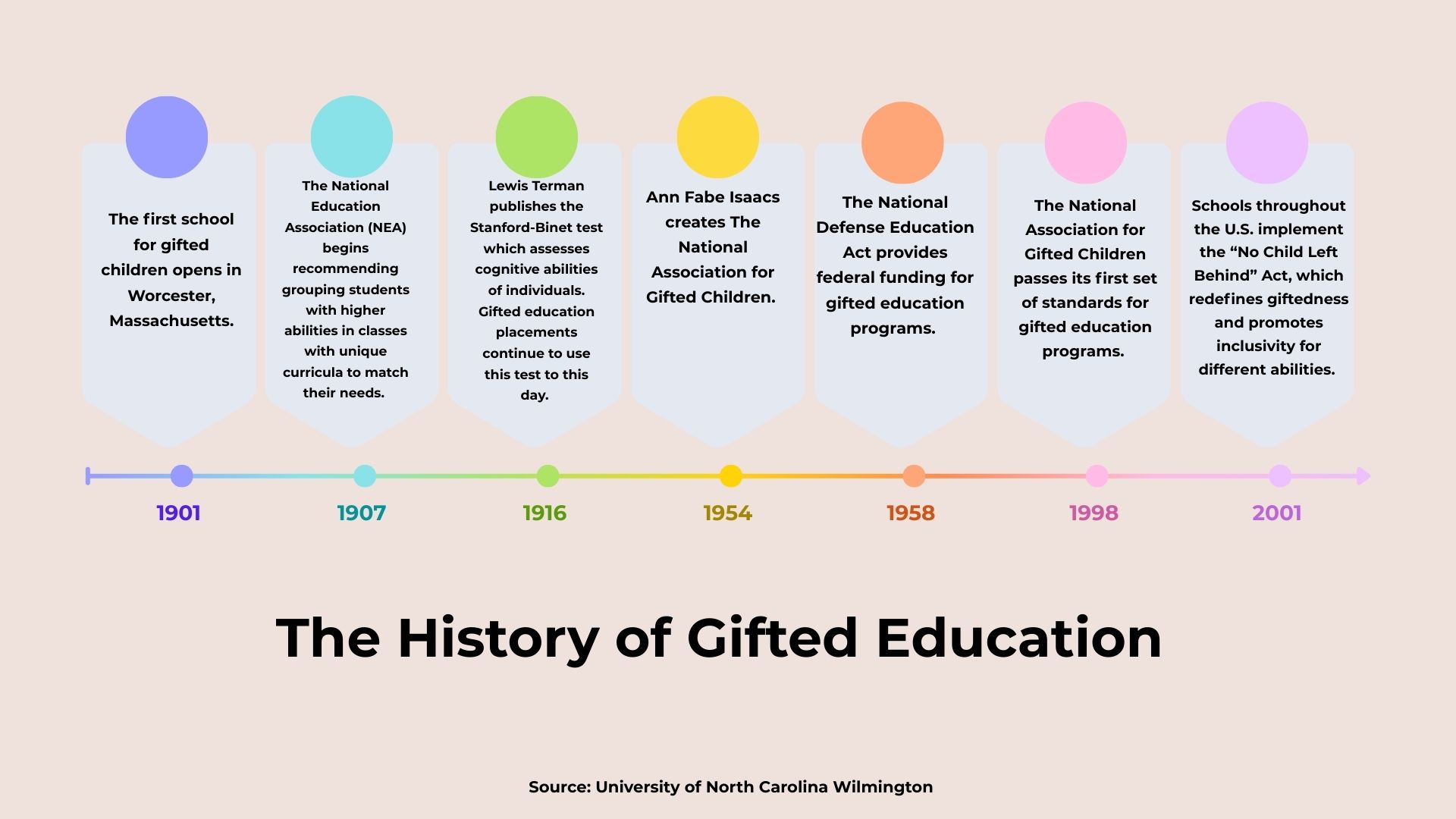
The Gifted Education Program, also known as “Target” or “Advanced Placement Learning,” provides students with a curriculum differing from on-level classes. Instead of basic knowledge, this program creates courses specifically curated to commensurate with educational students’ needs and wants to excel in their academics. In Cobb County, students may participate in such classes beginning as early as first grade, after the completion and passing of state testing. Usually recommended by a teacher or parent, children receive a standardized intelligence test, which measures their overall IQ and background knowledge. In a majority of states, the student must score two standard deviations or higher to progress past this portion of testing. Then, the student must complete the second section of the evaluation: an individualized testing approach with a school psychologist. Within this testing, the school psychologist observes the student’s habits and body language to come to a consensus for his or her placement.
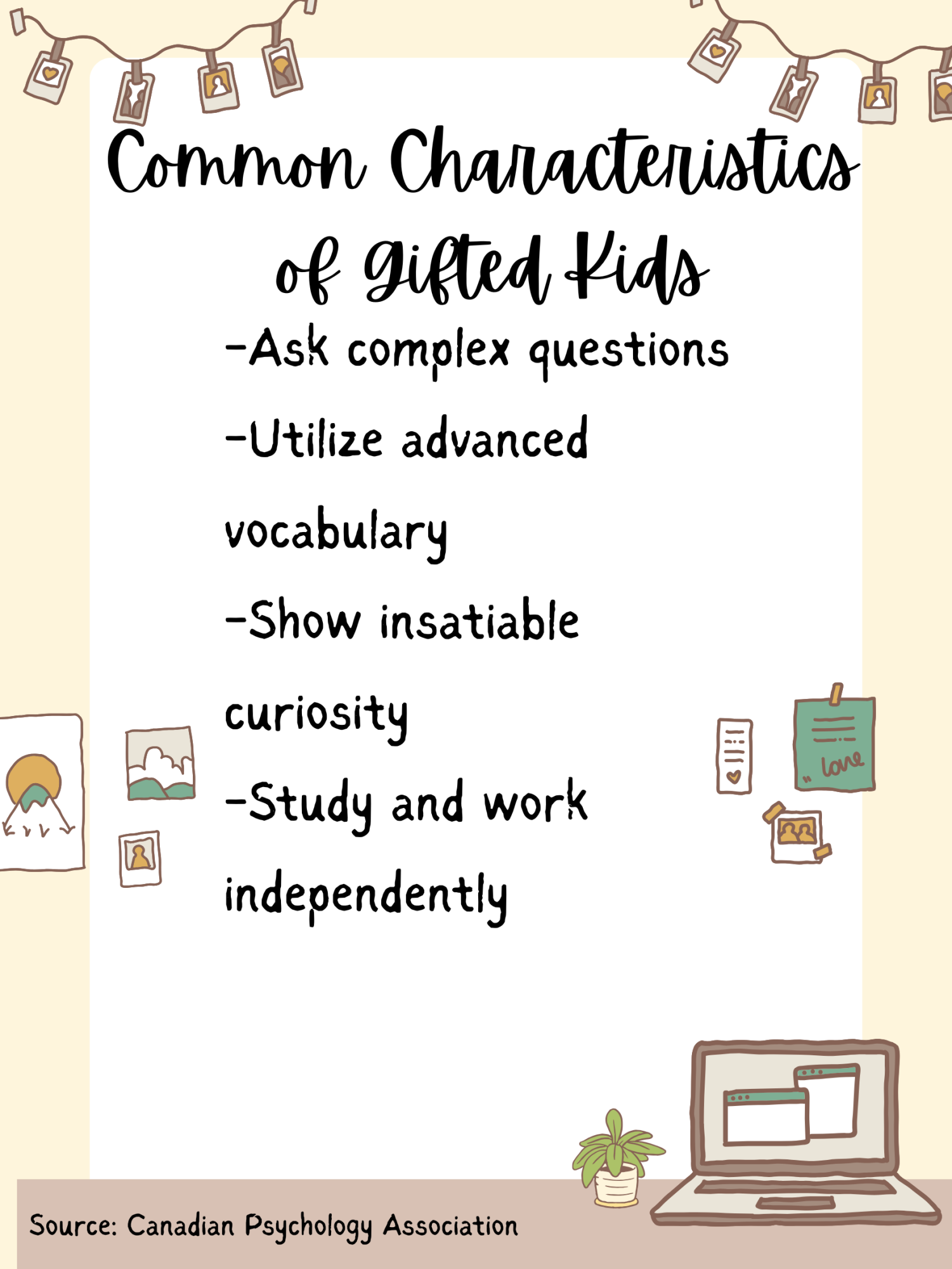
Once accepted into the program, students begin to experience a number of enrichment activities that focus on accelerating and deepening the typical school courses’ content. In younger classes, students complete complex puzzles such as the Rubik’s Cube, Sudoku and logic grids. Later on, students will focus on problem-solving and independent research — a type of learning that will remain present in advanced classes all the way up to college. These courses focus on maintaining the interests of and preventing boredom among intellectually engaged students, placing individuals in a position of challenging scholastic engagement. To maintain this worthy spot, individuals must demonstrate discipline and consistent progress.
“We try to test material in schools a lot and see how well it works and what kind of impact it has on achievement. The two big studies that happen on gifted kids are what’s the best way to teach — what types of curricula work better, what kind of instruction works better to increase their academic achievement — and there’s another area about social emotional issues. One of the areas I study is underachievement. For example, through cancellations and modifications in the curriculum, can we get grades up? Can we help lift attitudes towards school?” University of Connecticut professor and director of the National Center of Research on Gifted Education Del Siegle said.
The gifted program differs as students continue throughout their academic journey. In elementary school, students simply leave their designated on-level class, typically once a week, to receive this intense educational experience. In middle school, the gifted program differs from previous programs, as students with high achievement simply remain placed in classes of higher rigor. In Cobb County high schools, students may choose to join a magnet program specifically focusing on their interests, for example, NC offers a magnet program for international studies.
As students excel in college, a notable difference remains observable among thousands of formerly gifted pupils: one out of six becomes academic burnout. This striking change may occur from several factors. These include the characteristics of gifted kids, their relationship with academics and the effect of the gifted program on students’ self-concept.
Gifted children differ from average students, which may incur both a blessing and a curse. Students within this program may experience an inclination toward perfectionism, a fear of failure, unrealistic expectations, over-excitability and difficulties facing criticism. All of which places a burden upon students within this program, as they lack the ability to release their academic burdens. In addition, these individuals may exemplify multifacetedness due to their increased erudition. This characteristic seems tame until students need to choose a satisfying career path in an attempt to juggle all of their interests at once.
As gifted kids progress through the academic experience of middle and high school, they may overcrowd their schedules with extracurriculars and advanced classes to impress college admissions. Although this work may earn these kids a spot in Ivy Leagues, this addiction to academic validation can come with drawbacks. Not only does this need for an overcrowded schedule ruin the relationship between learning and gifted pupils — as gifted kids see academics as an idea to conquer rather than a journey to enjoy — it also cuts off the necessary time for students to rest.
“Sometimes gifted kids have been identified as gifted, and they like the idea that they’re gifted, and mom and dad like the idea, and grandpa and grandma like the idea even more…. Everybody is so impressed with them being gifted, so they get this identity of being gifted, and they go to school, and it’s easy, and they’re zipping through first, second grade, and they get to third grade. They realize, ‘Oh my god, this stuff is getting hard, and I’ve never had to study or work,’ and suddenly school gets hard. So, develop this fear of getting things wrong because they like being gifted,” Siegle said.
Students placed in a gifted program may identify with their academic lives. For example, the “big fish little pond effect” suggests that students feel lower academic self-concepts when placed in environments with students who exemplify high scholarly success. This experience usually occurs in college, as students transition from a school with a lower population — and therefore fewer students who excel in academics — to a university or college where they may see hundreds of academically-inclined students like themselves. This ideology remains dangerous, as students who base their self-worth on academics may take a simple mistake or failed assignment as a personal failure.
“The gifted program influenced me growing up because it was a lot of external validation, and it was seen as a good thing, which made me feel more confident about my learning abilities. The activities with hands-on problem solving and reading the book about the boy who built a windmill for his village were super inspiring. It changed my view of school because I was always excited to go [to the gifted program.] Some challenges were having to post our classwork publicly; it was so extra. Has it impacted me today? Kind of, I mean, I now take all honors and [Advanced Placement] (AP) classes,” junior Grier Coats said.

Burnout results from several factors, specifically a lack of rest and consistent stress. As gifted kids spend their entire adolescence focused on excelling in school — losing hours of sleep and time off — the sheer pressure from parents, teachers, and their own expectations may become overbearing. Individuals who experience burnout feel mental fatigue, where even the simplest tasks may seem overwhelming. Burnout manifests itself in various ways, but it may lead to a sense of apathy and detachment from the world. In the academic environment, burnout may cause an individual to lack the motivation and energy to finish their responsibilities or assignments.
In addition, burnout can cause both mental and physical issues. For example, experiencing burnout for an extended period of time can result in depression, anxiety and insomnia, or health issues such as high blood pressure and a weakened immune system. This means that it remains vital for individuals, especially academically-focused students, to take time off and recharge their psyche, as burnout can cause consequences worse than missing an assignment or writing a mediocre essay.

Although an immediate remedy for burnout remains undiscovered, proper rest, lifestyle changes, enough sleep and mindfulness all decrease stress factors that cause burnout. In addition, current literature suggests that adolescent burnout cases usually resolve by the time an individual advances into late adulthood.
Children who complete the gifted program do not always face the fate of burnout, as all students navigate the educational experience differently. The possibility of burnout varies person to person, and may increase or decrease in individuals depending on their stressors, physical health and lifestyle habits. Frequently, advanced academic programs strengthen the time management skills of students and advance them psychologically, allowing them to thrive in an academically challenging environment. For example, disinterest in academics or an unchallenging education causes academic burnout. The gifted program provides opportunities for students to explore their personal interests through research projects and offers stimulating assignments.