



The U.S. Constitution preserves the idea that citizens should utilize their natural rights that no individual can abuse or withdraw. During the Enlightenment period, numerous philosophers held ideas for the future of the U.S., including John Locke. Locke brought ideas of life, liberty and the pursuit of happiness, meaning that citizens of the U.S. should exemplify specific freedoms and rights to maintain a fair and comfortable lifestyle. As students advance through the school system, they learn about laws and amendments to the Constitution focused on keeping citizens safe and in control of their government.
Medicine has similarly developed over the past centuries from natural remedies to surgical procedures. Through this progression, lawmakers and healthcare workers alike have worked to ensure the protection of citizens’ rights while in healthcare facilities. Ethics in the healthcare field refers to the moral principles and guidelines that help govern the conduct of healthcare professionals, which help guarantee the protection of citizens’ rights. As NC and other high school students interested in healthcare prepare to study at the collegiate level, courses such as pre-medicine and nursing require them to learn about the ethics of healthcare and how certain laws limit how doctors or nurses can work with a patient, depending on the context of a situation. For example, if a person loses consciousness or can not consent to a procedure, a healthcare worker cannot begin any procedures without consent from a pre-designated decision-maker. The medical field offers numerous specialties, such as doctors, nurses and practitioners, which all demand different requirements in the amount and type of schooling. Even in different pathways within healthcare, ethics serves as a prominent focus in schooling, as it can decide the fate of the worker. If a medical worker disobeys the laws surrounding a situation, such as continuing a procedure without consent from the patient or family members, or if a patient does not provide consent and the worker continues a medical procedure without approval, substantial consequences can occur, such as the government revoking a medical license.
“Ethics is very critical in medicine. As a physician/provider, you have a great deal of control over several aspects of another human being’s life. Not only life or death decisions, but decisions that can greatly affect a person’s finances, family life, occupation, etc. A person’s health and well-being affect everything in that person’s life. Therefore, treating a patient requires the highest ethical standards. With current healthcare regulations, there is mostly a good balance, but in some cases, there is excessive control where decisions can be influenced by financial issues, which can affect the patients’ health. The system is not perfect yet,” Physical medicine and rehabilitation physician Dr. Hemal Mehta said.
In an attempt to establish ethics and consent within healthcare facilities, the different facets of government, federal and state, created specific regulations to ensure the safety of its citizens. Through different acts and laws, the government can help healthcare practices maintain ethical codes while still assisting patients reliably. The federal government works to build programs and laws that protect not only the patient him/herself, but their personal information.
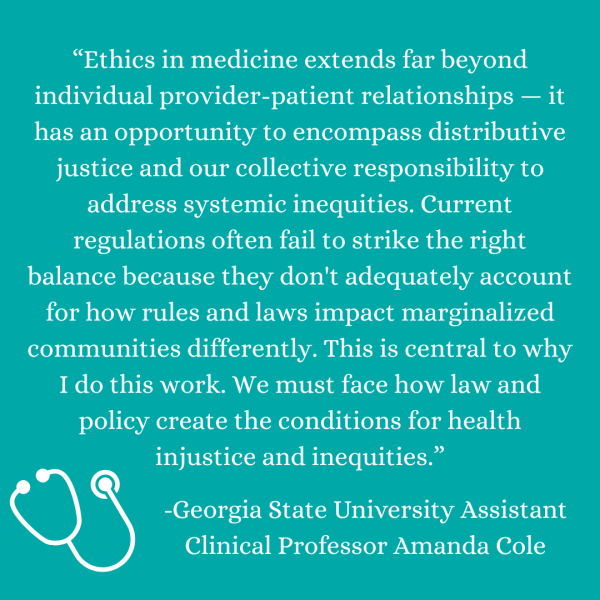
The Health Insurance Portability and Accountability Act (HIPAA) sets standards for protecting patient health information, whether paper, electronic or oral. This act overall secures the patient’s individual rights by ensuring confidentiality and integrity. Additionally, Congress passed the Health Information Technology for Economic and Clinical Health Act (HITECH) in 2009, which expands on HIPAA to address recent technology that can lead to data leakage. This act focuses on promoting progression toward the electronic transmission of health information, while still maintaining privacy and security standards. These regulations overall protect patients’ identities and secure their data on their electronic health records (EHRs).
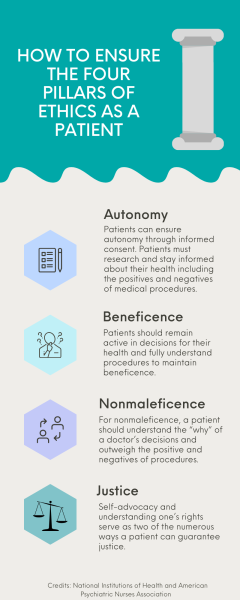
When providing treatment to patients, medical workers must follow specific codes of conduct to ensure ethical procedures and informed consent. Medical workers rely on four pillars to help them maintain ethical treatment: autonomy, beneficence, nonmaleficence and justice. These pillars help medical workers, especially when facing tension, to ensure the best care for the patient.
“Healthcare professionals ALWAYS, and I emphasize ALWAYS, face tension between their training, ethical judgment, or personal convictions and the legal obligations they are required to follow. There are so many people medical and non-medical who have their hands in the entire operation of treating a patient from hospital administrators, to health insurance auditors, to healthcare attorneys, to pharmaceutical companies, to physicians, to the relatives of patients, to the patients and more that are pushing the healthcare providers to make decisions which favor the insurance companies or the hospitals corporations or a family member, etc. Basically, there are too many hands in the pot. The four pillars are so ingrained in my head, and so I automatically consider them when I am treating patients,” Mehta said.
Autonomy refers to the patient’s right to choose their own decisions about their body and level of treatment, ensuring that decisions are voluntary and informed. Before a patient can decide on a treatment, healthcare providers must guarantee the patient’s capacity, or ability to understand the information and appreciate the consequences. If a patient seems in a state where they do not hold capacity, a designated decision-maker, such as a family member, holds the power to decide on procedures. Healthcare professionals must take capacity into account prior to a treatment or incident, so that they can act accordingly.
Beneficence requires medical workers to act in the best interest of the patient at all times. Although professionals ultimately follow the patient’s decision, they should recommend treatments that will likely benefit the patient and overall minimize potential harm. Workers also must guarantee that patients have sufficient information on potential treatments, creating informed consent. Beneficence also ensures the comfort of patients, whether during end-of-life care or research experiments; healthcare workers ensure patients maintain maximum comfort and protection from harm. The common rule for maintaining beneficence, that the potential benefits must outweigh the risks, helps guide medical professionals to decisions.
Nonmaleficence, commonly known as the opposite of beneficence, translates to “do no harm.” This principle requires medical professionals to avoid actions that could potentially cause pain, suffering or death and to overall refrain from using ineffective treatments. Nonmaleficence explains that the occurrence of minor harm can prevent a higher amount of suffering in specific instances. For example, surgery for a ruptured appendix may prove safer, even with complications, than no surgery at all. This principle presents a risk — yet necessary — of medical procedures as all surgeries contain a possibility of harm. Healthcare workers overall must use their knowledge and the patient’s final decision to reduce suffering overall.
The last pillar, justice, guarantees fair and equitable treatment to all patients in regards to a fair distribution of resources and an absence of discrimination. Even if a patient may lack insurance or funds to pay for their treatment, medical workers must still fairly allocate limited resources and ensure all patients receive the necessary care. Justice also requires workers to set aside their personal biases when it comes to treatment to provide the equivalent standard of care, no matter the race, gender or religious affiliation of the patient. Overall, justice defines how all patients should receive an equal approach to care from healthcare workers.
Together, these four pillars combine to build the ethical backbone of modern medicine. These principles do not just provide structure to the medical world, but they also serve as a medical compass for a healthcare worker’s moral dilemmas, and they teach them how to separate the patient’s choices and their personal care to ensure the best outcome. In situations that lack clear answers, like end-of-life care, these pillars guide providers toward fair and logical decisions. Just as laws and the U.S. Constitution maintain order in society, these four ethical standards preserve order and integrity within the medical field.
Although the individual morals of a medical worker play a vital role in ethical behavior, different systems of law enforcement ensure ethical principles remain consistent across the U.S. Government agencies, state medical boards and hospital administrators serve as regulators that monitor professional conduct and hold practitioners accountable in specific cases. In Georgia specifically, this responsibility falls mainly under the Georgia Composite Medical Board (GCMB), which oversees physicians and other medical professionals in the state. The GCMC contains the authority to investigate cases, suspend and revoke licenses and utilize disciplinary actions for violations like malpractice, negligence or leaks of patient confidentiality. The Georgia Department of Public Health (DPH) also helps with regulation by setting statewide policies for healthcare institutions and regulations through health-related laws. Accreditation bodies, like The Joint Commission, continue to evaluate Georgia hospitals and healthcare facilities for both state and federal ethical standards.
Within Georgia, hospital ethics committees and institutional review boards (IRBs) oversee ethics in patient care and medical research. Major healthcare systems like Emory hospitals and Piedmont guide healthcare workers through difficult decisions like life-sustaining treatment, informed consent and patient autonomy. Various universities, including Augusta and Mercer, use IRBs to protect research participants and maintain informed consent. Due to these systems and the access to medical education, Georgia healthcare providers strongly uphold ethical integrity.
“Ethics are an essential aspect of the medical field. They form the baseline for all procedures and actions. In terms of making pivotal decisions, most laws side with patients, claiming that the ethical decision would entail doing what the patient or the family wishes. Despite the controversy of doing so, especially if patients decline essential procedures due to certain beliefs, I think following patients’ wishes is the best option overall, as it avoids lawsuits and keeps individuals pleased. At the end of the day, doing so follows current ethics guidelines and keeps patients satisfied,” magnet senior Micah Wallace said.
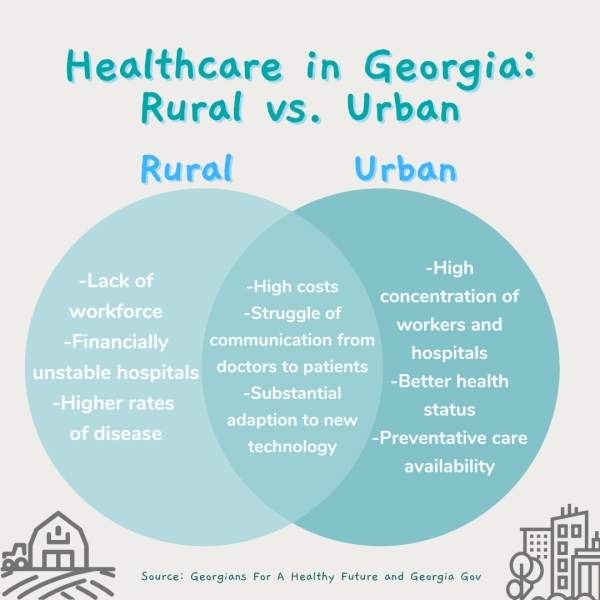
As technology continues to reshape healthcare, new ethical challenges rise with data privacy, Artificial Intelligence (AI) and informed consent. Georgia still contains disparities between urban and rural hospitals, which raises questions about fairness and overall access to care for every person in Georgia. Limited staff, financial instability and unequal resources in rural areas also commonly lead workers to tough decisions that test justice and beneficence. These issues present the belief that medical ethics must continually evolve to meet the growing needs of patients.
In medicine, ethics serves as both the backbone and boundaries to heal, which ensures that morals never overtake procedures in medical workers. Without ethical standards, the healthcare system would ultimately collapse along with the line separating healing and harming. Ethics overall serve as moral handcuffs to keep the practice of medicine humane.







Aria • Dec 19, 2025 at 5:15 PM
Amazing. I love. Wow. Beautiful. Thoughtful.