

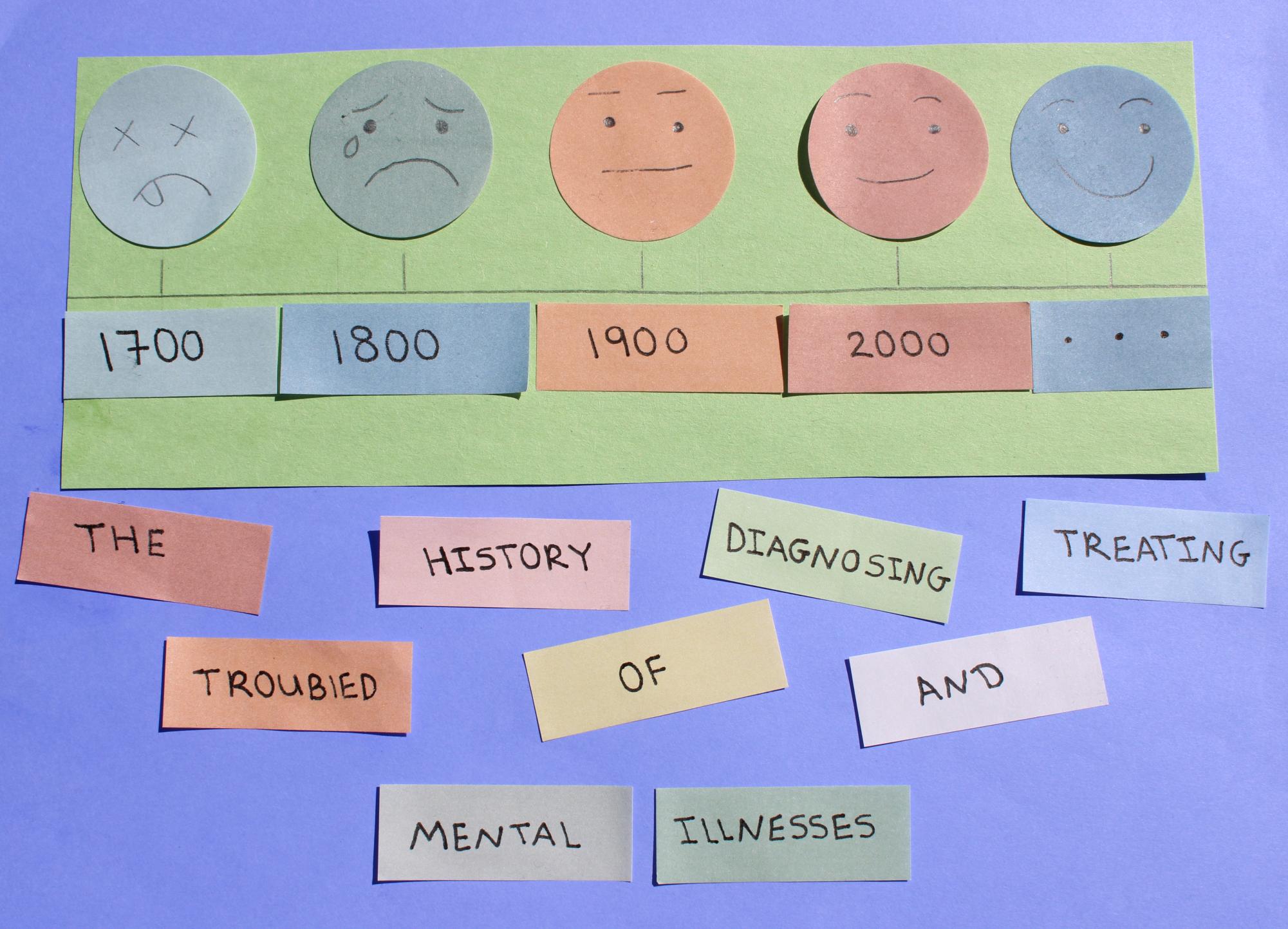

Negative stigmas and discrimination against the intellectually and developmentally challenged persist throughout history; however, the way in which they manifest evolves. Mental health, an aspect of life that impacts all human beings, repeatedly faces neglect, denigration and misunderstanding, especially when it comes to diagnosing and treating struggling individuals. Mental health directly impacts students’ academic success, ability to build relationships, and development of essential life skills. The availability of early care can prevent issues later in life, such as substance abuse or dropping out. To further understand how mental illnesses changed over time and continue to develop, one must look to the past to learn how persons and societies perceived and treated mental illnesses throughout different eras. Understanding the flaws and shortcomings throughout history helps psychologists, doctors and biologists gain a clearer understanding of how mental illnesses will continue to change over time, especially with the introduction of new technologies, the rise of social media and the impact of newer generations.
Mental illness, otherwise known as a mental disorder, refers to a condition of the mind that affects one’s mood, personality and behavior. Approximately 20% of adults in the U.S. live with a diagnosed mental illness, and serious mental illnesses affect approximately five percent of the U.S. adult population. Additionally, mental health concerns a person’s emotional, social and psychological health. These two terms, frequently intertwined, exist on a complicated and convoluted spectrum, one that habitually leads to heated debate. Poor mental health typically corresponds to the development of mental illnesses and, in turn, negatively impacts the physical wellness of a person. While not a bodily disability, mental illnesses can just as likely lead to death through means such as suicide or heart failure. On account of these fatal possibilities, the increasing importance for mental health centers and hospitals to learn to care for people who struggle with mental illnesses emerges as a controversial and multi-perspective topic, one highly volatile and debated.
“Because mental health, and therefore, mental illnesses are fundamentally a part of human life, it coincides with the beginnings of the human race and societies. For prehistoric cultures, abnormal behavior was typically attributed to supernatural occurrences, such as possessions, or touched by a god. While rooted, these cultures were trying to heal the troubled persons, these ceremonies often involved torture, consumption of dangerous substances, and even death. The issue of stigma in the Middle Ages is complicated because Medieval Europe was deeply religious and the idea of a purely secular way of thinking was unthinkable. There were doctors and there were priests, and they did different things, but the concept that conceptions of illness and medical treatment could be divorced from spirituality is a modern one,” Case Western Reserve University Historian of Medicine and Psychiatry John Sadowsky said.
Perhaps the main notable period of mistreatment and misdiagnosis of mental disorders occurred during medieval times in Western Europe. The people of this time — from the fifth to the 15th century — typically attributed abnormal behaviors and thoughts to beliefs associated with the dominant religion of the time: Christianity. Individuals who suffered from mental disorders fell victim to demonic possession and experienced dereliction, cruelty and imprisonment. While a rare practice in the early Middle Ages, institutionalization grew increasingly popular as time passed. Instead of receiving proper treatment, patients endured torture, beatings, starvation and other various dehumanizing acts within mental asylums. These barbaric and horrific practices frequently traumatize individuals unlucky enough to find themselves committed to an institution. On the other hand, the lack of understanding surrounding mental illnesses and mental health at the time contributed to this mistreatment and abuse, which occurred within mental institutions. Knowledge of physical, let alone mental, disabilities remained exceedingly limited during the Middle Ages, and not just in Europe. Across history, everywhere from the Americas to Asia, the understanding of mental illnesses has developed within the past 200 years; however, the stereotypes and generalizations that come with them have remained consistent across centuries. Inaccurate stereotypes that continue to surround people with mental disorders, such as their inherent ‘dangerous nature’, their lack of the ability to function like a regular human being, or their inability to live normal lives, further the discrimination and underrepresentation of people living with mental health issues.

Since the beginning of humanity, the understanding and treatment of mental illnesses have proved remarkably scant, inhumane and underrepresented. Only until the 18th century did the perception and empathy for people struggling with mental illnesses appear to improve. This reform, known as Moral Treatment, marked the transition of society, religious leaders and doctors, recognizing mental illness as a medical condition, rather than a religious or supernatural force. Characterized by an increase in the humane treatment of mental illness patients, this period involved medical professionals tending to patients with kindness, dignity and compassion, as well as with an advocacy for safer and curative mental hospitals. Above all, this time also marked the beginning of psychiatry, or the branch of medicine concerned with diagnosing, treating and understanding mental illnesses. Along with psychiatry, scientists and psychologists began developing the first truly effective medicines for these disorders.
The reconstruction of the way people view and treat patients with mental illnesses faded towards the middle of the 19th century and throughout the early 20th century. The once-praised asylums and mental institutions known for their superior and effective care deteriorated into rundown, underfunded and severely understaffed facilities, leading to the relapse in harsh conditions and treatments of mentally disturbed patients. The return of these practices fueled the next reform, known as the Community Support Reform era, which began around the 20th century and continues to this today.
“What would help would be some serious commitment to providing mental health services to those in need. But that funding doesn’t really happen. Mentally ill people do not put a lot of money into the pockets of state and national legislators, which means that few people in power will really care about them. It’s not a new problem,” retired Psychologist and Historian of Psychology Ludy Benjamin said.
Modern-day mental health treatments involve medically-based alleviations such as antidepressants, antipsychotics and psychotherapy. This shift allows for a better quality of life for people who struggle with mental illnesses, as their improved access to specialized care increases their chances of recovery and decreases symptoms. Furthermore, instead of asylums and facilities, community-based recovery centers provide accessible, localized and personalized care. Despite these positive shifts towards an effective care system, issues that commonly appeared in the past remain. Today, problems such as cost barriers, staff shortages and racial and ethnic bias continue as a stark reminder of the dark past of mental health treatments and failures.
In the 21st century, mental health apps, awareness months and therapy services define what mental health care should provide to people struggling with mental illness accessibility. Although a recent innovation, social media acts as one of the leading contributors to the increase in mental health awareness and care. Digital services such as the National Suicide Prevention Lifeline and online therapy consultations allow for immediate professional help and personalized care depending on the situation.
While providing support, social media also presents risks that could potentially harm the mental health of individuals, particularly young children. The internet can act as a way for children to access violent content, increasing risks of social comparison and the potential for cyberbullying. For students, social media creates a distraction in the classroom, sleep deprivation and hindered social skill development. Across Georgia classrooms, administrations began requiring students to place their phones in a phone caddy to prevent students from using their phones during class time. Both teachers and parents believe that the overuse of social media could potentially lead to the development of mental disorders, especially when young teens’ susceptibility drastically surpasses other age groups. Common struggles include conditions such as depression, anxiety and body image issues.

“New influences such as social media discussions of mental illness can have a range of impacts. These might include personalized expressions of mental illness as an experience, to help break down stigma about illnesses once more private or kept silent. Positive support for people through sharing their stories has been a feature of the 20th and 21st-century history of mental illness. However, such influences of social media might also create unintended outcomes for people living with mental illness. People using social media can make harmful statements and end up reinforcing stereotypes from the past. On balance, discussion of mental breakdown and a range of mental illnesses via social media needs to be managed carefully, moderated and supported to avoid those unintended outcomes,” Australian Medical Historian and Academic Administrator of The University of Newcastle, Catherine Colberne said.
The undeniable importance of mental health applies to all age groups, though access for younger generations, particularly students, remains especially important as they tend toward susceptibility for mental health struggles. The vitality of mental health care for students matters tremendously, as mental health directly ties to academic performance. A study conducted by the National Institutes of Health found that poor mental health in students directly impacts their memory, concentration and problem-solving abilities as well as their academic motivation. Poor mental health similarly leads to negative impacts on their overall wellness, such as their social development and ability to manage stress. For students, access to mental health care fosters healthy relationships with friends, classmates and family members as well as increased effective communication. Poor mental health also correlates with substance misuse and self-harm, which can leave significant long-term health effects. Community and teacher support for students strongly relates to higher overall potential and fosters better employment opportunities in adulthood. At NC, students can access mental health care through their counselor, who can provide direct support or resources for outside counseling services.
“There are many ways a student’s mental health relates/impacts their success, ranging from positive effects to even negative effects and everything in between. The way I usually view some main negative impacts would be when you have a student who is trying to study hard or pay attention in their classes, but something is weighing heavily on their mind. The most frequent issues I see from students are stress and anxiety. All feelings are valid, but it is just important for students to practice checking in with themselves to recognize these feelings and try different tools. North Cobb has done a good job at talking about mental health through resources we provide, such as Sources Of Strength (S.O.S.). The first step for reducing stigma surrounding mental health is talking about it. If people don’t talk about their struggles, other people who may be going through similar things may be thinking they’re the only ones feeling or thinking a certain way. When we work together as a community, we are able to help one another feel better,” counselor Samara Rojas said.

The crucial need for mental health care and empathy only increased as time progressed. As seen throughout history, psychiatric illnesses and those affected by them faced disparagement, physical abuse and abandonment, continually resulting in the exacerbation of their psychiatric state. Particularly for young individuals and students, the importance of mental health awareness intensifies, with the use of social media and community support becoming progressively accessible. Several modern trends allowed for the rise of effective mental health care, such as the increased prevalence of mental health issues, deinstitutionalization and heightened societal awareness of mental illness symptoms, accentuated by social media. While the efficiency of mental health care historically wavered in effectiveness, the importance of accessibility and well-educated providers never failed to. To improve the understanding and treatments for individuals struggling with mental disorders, looking to the past allows for a better understanding of the care of the future.