


Holocaust Remembrance Day invites humanity into a time of solemn reflection upon one of history’s darkest chapters, during which millions of innocent lives vanished through systematic cruelty, racial hatred and state-driven violence. This day honors Jewish families, Romani communities, disabled citizens, LGBTQ+ individuals and political opponents who endured persecution under the Nazi’s rule. Through remembrance, truth survives, voices echo across generations and dignity receives renewed protection.
During the early 1930s, Adolf Hitler and the Nazi Party gained power within Germany through propaganda, fear and nationalist promises. Jewish citizens soon faced legal discrimination under the Nuremberg Laws, which stripped rights, restricted professions and isolated families from society. Shops owned by Jewish families suffered destruction during Kristallnacht in 1938, when windows were shattered, synagogues burned and thousands faced imprisonment. This violent night signaled deeper cruelty ahead.
With the outbreak of World War Two, Nazi leadership expanded persecution across occupied Europe. Jewish families faced forced relocation into overcrowded ghettos such as Warsaw and Lodz, where hunger, disease and despair dominated daily life. Children carried burdens no child should endure, while parents struggled to preserve dignity under inhumane conditions. Within these confined streets, hope survived through shared prayers, secret schools and whispered stories of freedom.
Soon afterward, Nazi officials organized mass deportations through railway systems designed for human transport toward extermination centers. Auschwitz, Treblinka, Sobibor and Majdanek served as sites for industrialized murder. Upon arrival, families faced separation through selection lines, with elderly citizens, children and disabled individuals sent directly toward gas chambers. Zyklon B suffocated countless victims within sealed rooms, while crematoria reduced lives into ash.
Despite unbearable suffering, resistance was endured. Jewish fighters organized uprisings within the Warsaw Ghetto during 1943, choosing courage over surrender. Prisoners within camps risked lives through secret documentation, sabotage and communication with resistance networks. Even under terror, the human spirit refused silence. Each act of defiance preserved dignity against overwhelming cruelty.
The Holocaust consumed six million Jewish lives, alongside millions of additional victims targeted through racial ideology, political opposition or physical difference. Entire communities vanished, languages faded and cultural traditions faced erasure. Through remembrance, humanity restores identity to victims whose lives carried dreams, laughter and meaning beyond statistics.
“I survived with no one. Not only did I survive with no one, but my identity was taken away. I was told I can’t be who I was; I have to be a new person. So I was surviving as a new person, but the old person, a little Jewish girl, became dysfunctional. After the war was over I was in a lot of trouble because I didn’t need this new fabricated personality that claimed to be a Catholic. I didn’t need her anymore, but without her, who was I?” Holocaust survivor Joan Da Silva said.
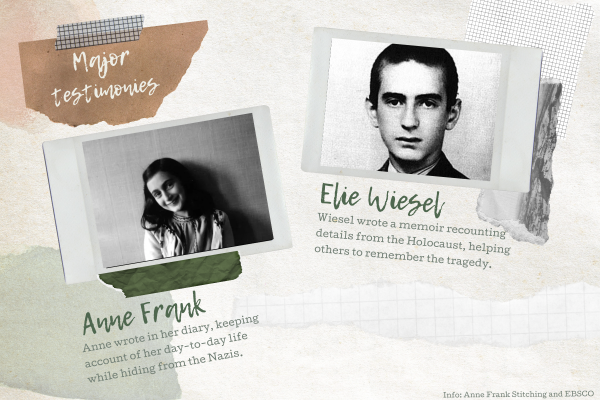
Survivor testimonies preserve memory with powerful detail. Elie Wiesel, author of “Night,” shared haunting reflections upon life within Auschwitz, revealing hunger, fear and lost innocence through poetic language. Anne Frank, whose diary survived long after she died in Bergen-Belsen, recorded hope amid hiding, capturing youthful dreams despite constant danger. Their voices guide future generations toward empathy through truth.
Holocaust Remembrance Day also honors individuals who risked their safety to protect others. Oskar Schindler sheltered Jewish workers through factory employment, saving over one thousand lives. Danish citizens ferried Jewish neighbors across seas toward Sweden, choosing compassion over compliance. These stories illuminate moral courage during historical darkness. Remembrance Day encourages education through museums, memories and survivor accounts. Yad Vashem in Jerusalem conserves testimonies, artifacts and names through careful documentation. The U.S. Holocaust Memorial Museum offers immersive exhibits that guide visitors through pre-war Jewish life, Nazi propaganda, ghetto conditions, camp systems and liberation. Knowledge strengthens awareness, guarding truth from distortion.
January 27 highlights lessons regarding prejudice. Antisemitism did not rise overnight. Hatred grew through language, stereotypes and political manipulation. When silence replaced protest, cruelty expanded unchecked. Through remembrance, societies strengthen vigilance toward justice, refusing to allow space for discrimination to grow. Ceremonies across nations include candle lighting, memorial readings and moments of silence. Each flame symbolizes memory, resilience and honor. Quiet reflection transforms grief into respect, ensuring victims receive recognition beyond historical records. Through collective remembrance, humanity affirms shared responsibility toward compassion.
“Holocaust Remembrance Day is important because in order to make better choices in the present, we need to learn from the past. With everything happening on the federal level in the U.S., recalling how so many people lost their lives because of mindless hate is essential to not causing those same harms to marginalized communities today. It’s our obligation as citizens of the world to be kind to one another and treat everyone with respect. It’s awe-striking how far standing up for others can take us towards creating a more peaceful world,” NC magnet alumni and former Editor in Chief Ciara Whimbush said.
Holocaust Remembrance Day carries enduring purpose through education, empathy and historical truth. This day preserves the memory of suffering, honors courage and strengthens dedication toward dignity. Through remembrance, humanity protects future generations from repeating past horrors. By honoring those lost, society chooses light over darkness, understanding over ignorance and humanity over hatred.