


With the emergence of the internet, thousands of individuals use this to their advantage for different types of people with varying ethnicities, disabilities, hobbies and interests, to harbor a safe space for users of all kinds. Even so, as the internet grows in importance in everyday lives, individuals experience harsh consequences from its use. The youth, including NC’s students, particularly interact with this and face the repercussions of the constant use of the web. With this increased popularity, minority groups — specifically women of color — continuously face negative biases on social media platforms. Noticeably, compared to individuals who present lighter skin shades, women of color displayed on people’s screens face substantial hate for the sole reason of their gender and skin tone.
Once the web gained power over users’ lives, fans created a public accountability system known as cancel culture. With this system in place, influencers’ audiences boycotted content creators after they committed an objectionable or offensive act. As this way of punishment gained momentum, people used it to take matters into their own hands, affecting public figures’ personal lives beyond the internet. Since the late 19th century, women of color experienced repercussions excessively in comparison to males or the majority groups. For instance, minority celebrities such as Janet Jackson face backlash for simple mistakes. During the 2004 Super Bowl closing show, she performed with Justin Timberlake, and a wardrobe mishap occurred when Timberlake ripped a part of Jackson’s top, resulting in her exposing herself to the crowd. Following these events, viewers began villainizing Jackson as she sparked international outrage, which left her blacklisted from a significant portion of the music industry for years. Despite causing the incident, Timberlake went on to thrive as a solo artist, and the fallout did not follow him into his newfound career. This incident represents the issues faced in the minority community for celebrities and influencers alike.
“As I don’t have an account to post myself on, I don’t personally see hate toward myself, but as I watch others, it seems I see the most hateful commentary on posts of people of color. It reflects a lot of what I see in the real world, on a basis between open racism and widely accepted discrimination. This behavior shown through evolution on the internet is honestly sickening as people throw hate at people for the sole purpose of their skin color or their differences,” NC grandmother Marian Hollenburger said.
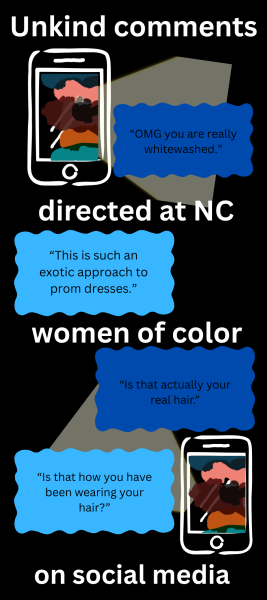
Repeatedly, women of color find themselves on the receiving end of harsh comments and negativity. These women experience this due to the way they look or speak, rather than what they say. While members of the majority receive uplifting feedback for their confidence or appearance, women of color frequently face criticism for the exact same traits. This creates an environment where simply expressing oneself freely results in harassment. For marginalized communities, up to 61% participating online face a constant battle to receive fair treatment from other users who especially target female groups.
Popularity on social media frequently ties to privilege and aligns with the praise that comes with lighter skin or a mainstream background. Trends reward users who fit into a narrow definition of beauty by showcasing the videos on others’ algorithms frequently, and that standard rarely includes women of color. Scrolling through curated feeds, it becomes easy to notice who receives recognition and who remains unseen due to the results of colorism and systemic bias. When women of color break through and hit a viral streak, outsiders hold an opinion that consciously or subconsciously results in the restriction of opportunities in the online industry. In 2024, an analysis of beauty-related hashtags on Instagram showed that over 80 percent of top posts featured individuals with light or medium skin tones. Even within communities meant to highlight melanin beauty, the hierarchy continues on one side, sending an unspoken message that darker complexions exist at the margins of acceptability.
Behind the screen, the emotional impact of these online experiences remains clear. For women of color, logging onto an app does not solely mean posting a photo or sharing a thought, but preparing for potential hate, backlash or silence. Posting themselves means double-checking each word, image and tone to avoid a misunderstanding, resulting in 84% of women receiving attacks. Young girls grow up seeing these patterns play out and begin to believe they must work twice as hard to expect respect. These girls even change parts of themselves, like how they talk or dress, just to feel safe in an environment that should already welcome them. The pressure to constantly defend or explain themselves creates a level of exhaustion that others may never experience. Despite the negativity, these women continue to show up and represent their communities, creating space for themselves even when the internet does not accommodate them.
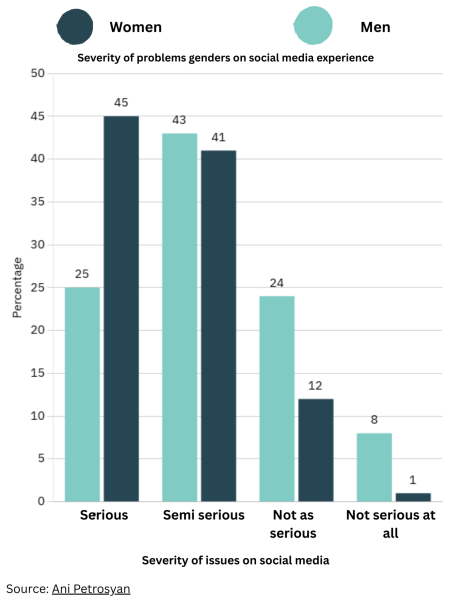
As harassment occurs on an average of 1 in 10 posts by women of color, these experiences receive neglect or downplay. When women of color speak out about unfair treatment, responses will claim they take the commentary too personally. Social media platforms claim to value diversity, yet they leave harmful behaviors unchecked, especially when directed at users from marginalized communities. Without real support, the message becomes clear that certain voices appear easier to stand alongside all due to their lighter skin tones.
“Black women’s participation in digital spaces is routinely met with disproportionate scrutiny and hostility. Their perspectives are often delegitimized through dismissive comments and targeted derision that function to suppress their visibility. This behavior underscores how online platforms can reinforce long-standing racialized and gendered stereotypes, thereby intensifying the severity of harassment directed toward Black women. Such conditions create a digitally mediated environment in which their everyday engagement becomes both emotionally taxing and structurally unequal. Several speakers emphasize that the cumulative impact of this hostility has significant implications for mental well-being and digital citizenship. Consequently, many Black women feel compelled to regulate their online presence as a protective measure against persistent forms of bias and harassment,” University of Maryland Associate Professor of Communication Catherine Steele, Ph.D. said.
Beyond celebrity culture, the online environment continues to reveal deep-rooted inequities that follow women of color wherever they appear. On social platforms that promote connection, the experience turns isolating and unsafe. One-third of women experience harassment online, yet the intensity of abuse increases when both gender and race come into focus. Hispanic and Black women experience backlash on a frequent basis compared to White women, such as physical threats, sexual intimidation or stalking. Behind anonymous screens, attackers feel emboldened to direct hate toward those they perceive as inferior, using race and appearance as open invitations for cruelty.
The standard of desirability and professionalism online continues to shift, depending on who occupies the space. When a White influencer speaks boldly, she presents confidence, but when an individual of Black, Latina, or Indigenous descent expresses the same self-assurance, she radiates intimidation due to stereotypical beliefs. This double standard discourages authenticity and rewards conformity. As women of color continue to alter their language or appearance to avoid backlash, the further they drift from their true selves. For instance, a commonly seen transformation presented in the Black community presents bleaching of the skin to fit into the beauty standards that do not include darker complexions.
“When you look at what Black women experience online, you notice very quickly that the hostility isn’t about disagreement — it’s about identity. People aren’t critiquing their ideas; they’re attacking who they are, and that reveals something far deeper about our digital culture. What’s striking is how rapidly these stereotypes circulate, almost as if the platforms themselves help legitimize them. Over time, that constant wave of bias becomes emotionally taxing in a way that most people don’t fully grasp. It affects how safe Black women feel participating in these spaces. And frankly, many of them end up adjusting their online presence not out of preference, but out of necessity for their own well-being,” Michigan State University Assistant Professor of English and African American and African Studies April Baker-Bell, Ph.D. said.
The emotional consequences of biased dynamics run on a deeper level than what meets the eye. A 2023 study found that repeated exposure to online discrimination significantly increased symptoms of anxiety and depression among young women of color. The same study revealed that a majority of participants felt a persistent need to monitor their behavior to avoid a target on their back, a constant state of hypervigilance that mirrors the stress responses found in real-world racial trauma. The mental toll of the internet exposure for women of color presses on as a normal part of their digital lives.
While social media companies frequently release statements about inclusion, their efforts stop at surface-level representation. These social media platforms celebrate diversity during cultural months but fail to moderate the hate that floods the comment sections of the very people they spotlight. This performative inclusivity leaves women of color to the emotional labor of educating audiences, calling out bias and defending their humanity, all while trying to succeed in an environment that rarely protects them. The National Institute of Health (NIH) found that posts by people of color or that address racial incidents receive flags from both the algorithm and people watching.
“I do think that social media highlights certain beauty more than others. Due to this, I mostly stay away from social media and beauty products because none of the people who are reviewing the products are of my skin color, which makes me feel wary of the product. I have noticed that whenever a minority woman expresses a strong opinion, people will come for them because they know what they’re saying, they have all the facts and they are taking a stand,” junior Riley Day said.
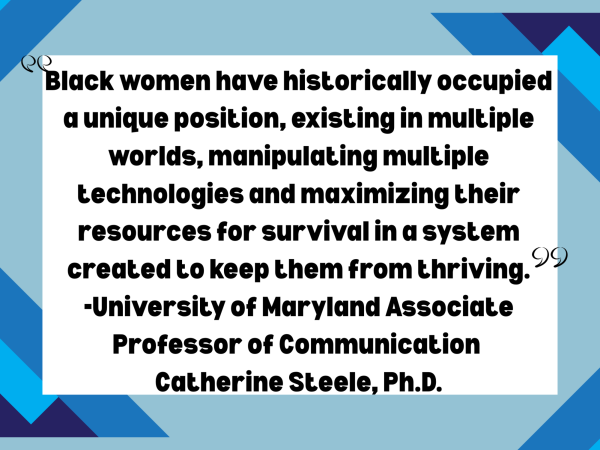
Despite inequities, such as harassment and hate for their complexities, women of color continue to carve out their own spaces within the digital world. They form communities such as United Women of Color and Women of Color in Community Development (WCCD) that hold importance on empowerment and body positivity, as well as mutual support. Through these spaces, they redefine beauty and challenge harmful narratives, all while uplifting one another in ways mainstream platforms fail to. The persistence of their voices does not erase the problem, but it underscores how resilience can form a safe space and community. In a place that prides itself on connection, women of color build safety from the ground up, proving once again that representation alone does not create enough structure to protect them from hostility and bias in the online space.